Plan your trip with our Split travel guide: top attractions, best beaches, local food, and essential tips for exploring Croatia’s stunning seaside city.
Table of Contents
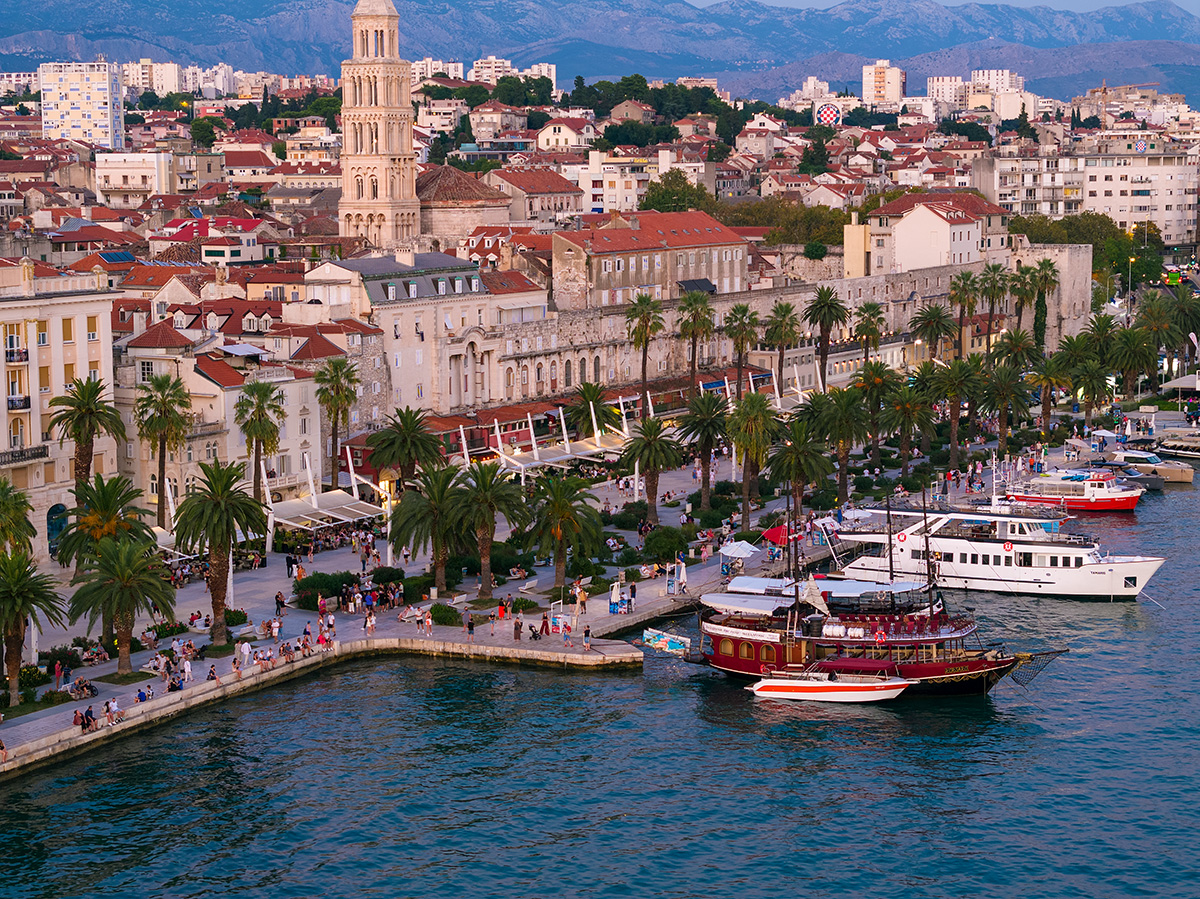
Split is the kind of city that makes you feel like you’re doing Croatia “right” within an hour of arriving: Roman stone under your feet, palm-lined cafés along the Riva, the salty breeze coming straight off the Adriatic, and ferries idling in the port like invitations. It’s not a museum-city — Diocletian’s Palace is a living neighbourhood — which is exactly why Split works so well for first-timers and repeat visitors alike. You can spend the morning wandering palace alleys and markets, climb Marjan Hill for pine-scented viewpoints by afternoon, and still end the day with a swim and a golden-hour stroll.
We’ve explored Split many times, so we know how it usually plays out in real life: on foot, in the heat, with a camera in hand — early mornings that feel quiet and cinematic, slow afternoons in the shade, and evenings that pull you back to the waterfront. Along the way, we’ve learned what’s genuinely worth your time (and what looks better on a brochure than it feels once you’re actually there).
That’s exactly what this guide is built on: the small details that shape your trip — which parts of the old town get noisy at night, what’s truly walkable (and what turns into a sweaty detour), where to swim when you want clear water without the chaos, and how to move with Split’s natural rhythm: markets early, shade at midday, golden hour on the Riva, and boats when the sea is calm.
You’ll find everything you need in one place: the best things to do in Split, a Diocletian’s Palace route that makes sense (not just a list), where to stay in Split by neighbourhood and vibe, Split beaches, food spots and simple local rituals, plus 1–5 day itineraries that don’t try to cram the city into a checklist. We also break down the practical stuff that can make or break a trip — Split Airport to city centre, ferry pointers for island-hopping, day trips like Trogir, Krka, and nearby islands — so you can plan confidently and arrive already feeling in control.
If you’re here for a Split that feels effortless — not rushed, not overplanned, just beautifully paced — this guide will help you build it.

Split Essentials
Split is compact, but it’s not effortless unless you respect how it’s built: the Old Town and Diocletian’s Palace are fully pedestrian, the palace lanes carry noise late into the night, and summer logistics (ferries, airport transfers, check-ins) move on their own tempo.
Add polished limestone underfoot and lots of stairs, and a few basics become non-negotiable: good shoes, light luggage, and a base that matches your noise tolerance. Leave some buffer between ferries, flights and check-ins, so Split stays easy, not exhausting.
✨ Split: fast & easy
- Best time to visit: May–June and September for warm sea + fewer crowds; July–August for peak buzz (and peak heat).
- How many days: 2 days for essentials, 3 days for beaches + Marjan, 4–5 days for islands or Krka without rushing.
- Absolute must-dos: Diocletian’s Palace loop, Riva at golden hour, Marjan viewpoint walk, Pazar market, and one swim.
- Best area to stay: Varoš / edge of Old Town for charm + walkability (with better sleep); Bačvice for beach + nightlife.
- Best day trip: Trogir (easy half-day) or Krka (full day nature). Islands if you want pure sea time.
🌿 Split overview
| Vibe | Roman stones + café culture + sea air + island energy |
| Best for | First-timers, couples, slow travellers, island-hoppers |
| Budget level | Mid-range (pricier in July/Aug; better value in shoulder season) |
| Walkability | Excellent in the centre (Old Town/Varoš/Riva are made for walking) |
| Beaches | City swims (Bačvice/Ovčice/Firule) + better coves near Marjan |
| Day trips | Trogir, Krka, Šolta/Brač/Hvar, Klis Fortress, Salona |
Insider tip: plan your mornings for exploring, keep midday for shade + a swim, and save the Riva for golden hour.
Quick orientation
Think of Split as a simple cross: Diocletian’s Palace and the old town in the centre, the Riva and ferry port directly in front of it, Marjan Hill rising to the west, and the main city beaches (Bačvice, Firule, Ovčice) stretching to the southeast.
Once you’re in or near the Palace/Riva area, almost everything in the historic core is within about 10–20 minutes on foot, with buses and taxis mainly used for the airport, outlying beaches, malls and some hillier neighbourhoods. The islands (Šolta, Brač, Hvar…) and most day-trip boats all leave from the same waterfront zone.

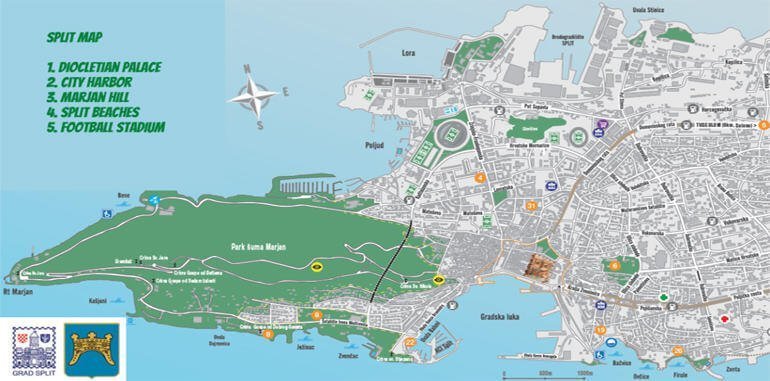
After staying in a few different parts of Split, we still prefer being near this central belt — it makes early ferries, late dinners on the Riva and quick beach runs feel easy, without needing a car or constant taxis.
✨ Need to Know: Split
📍 Location
Split is in Central Dalmatia on Croatia’s Adriatic coast — a natural base for islands and day trips.
✈️ Airport
The airport is Split Airport (SPU) in Kaštela, outside the city.
🕒 Transfer time
Plan roughly 30–45 minutes from SPU to the centre (traffic and transport dependent).
🚶 Walkability
The centre is compact: most key spots are 10–25 minutes on foot once you’re in the old town area.
🗓️ How long to stay
2–3 days covers Split well; add more time if you want islands or Krka without rushing.
🌡️ Heat reality
In summer, Split’s midday sun is intense — plan your “big walking” for mornings and save swims/shade for early afternoon.


First time in Split? Start here
When we plan Split for ourselves, we always start with one question: what do we want Split to be on this trip? A quick 1–2 night stop between Dubrovnik and Zadar, or a 3–5 day base for old-town wandering, swims and island or Krka day trips. That single decision answers most of the “first time in Split” doubts — how many days in Split make sense, whether to prioritise a room right by Diocletian’s Palace and the Riva or something calmer near the beaches, and which season will actually match your rhythm (spring and shoulder for exploring, peak summer if you care most about long, hot swim days and late-night buzz).
Use this section the same way we do when planning: pick your ideal length of stay first, then match it with the best time to visit Split for the kind of crowds, temperatures and ferry schedule you’re comfortable with. Everything else becomes much easier once those two are clear.
🗓️ How many days in Split?
Over several trips we’ve done Split both as a rushed overnight stop and as a slow, multi-day base — and it feels like a different city each time. Here’s what actually works in real life:
⏱️ 1 day in Split
Good for: a quick stop on a packed Croatia itinerary (between Dubrovnik, Zadar, Plitvice…).
You can: walk Diocletian’s Palace and the old town, stroll the Riva, add one viewpoint (Marjan or the bell tower), maybe a very quick swim if it’s hot.
You can’t: do proper day trips or really enjoy the beaches without rushing.
📆 2 days in Split
Good for: first-timers who want a feel for the city without dedicating a huge chunk of the trip.
You can: have one full old-town + Palace day (with markets and sunset on the Riva), plus a second day split between Marjan and a beach like Bačvice/Firule, or a short hop to Trogir.
This is the minimum we recommend if you want Split to feel like more than a transit stop.
🌿 3 days in Split
Good for: balanced itineraries where Split is both “city break” and soft base.
You can: have one focused city day, one slower “viewpoints + beaches” day, and one flexible day for Trogir, a short island visit, or just more swims and café time.
This is our sweet spot for most travellers.
🏝️ 4–5 days (or more)
Good for: using Split as a proper base for islands and day trips.
You can: cover the city at an easy pace, enjoy multiple swim spots, and add one or two full-day trips (Krka, Brač, Šolta, Hvar, Trogir + Klis) without turning every morning into a race.
Ideal if you like to unpack once and let Split be your “home” while you hop around Dalmatia.
Best time to visit Split
Split is technically a year-round city, but it doesn’t feel the same in April as it does in August. We’ve done both the sticky, high-summer version and the softer shoulder seasons, and they suit completely different types of trips.
🌤️ Best time to visit Split – at a glance
Think of this as a quick “heatmap” for the year in Split.
How to read it: each row shows one factor. Paler blocks mean lower / softer for that factor, darker blocks mean higher / stronger: air temperature (cool → hot), sea (cold → warm), crowds (low → peak), prices (low → high).
| Jan | Feb | Mar | Apr | May | Jun | Jul | Aug | Sep | Oct | Nov | Dec | |
|---|---|---|---|---|---|---|---|---|---|---|---|---|
| Air (feel) | ||||||||||||
| Sea | ||||||||||||
| Crowds | ||||||||||||
| Prices |
- Air (feel): pale blue = cool, pale orange = mild, deeper orange = hot.
- Sea: pale blue = too cold, mid blue = fresh, deeper blue = warm and swimmable.
- Crowds: pale green = low, peach–orange = high / peak.
- Prices: pale green = low, peach–orange = higher / peak.
Our favourite months for Split as a base are late May–June and September: warm sea, long days, and crowds that still feel breathable.
Dive deeper into Croatia’s seasons
Late April–June (spring into early summer)
- Days are long, light is beautiful, and the old town feels busy but not overloaded.
- Cafés and most tours are running, and ferries to the islands are frequent.
- Sea temperature is cool in April, swimmable by late May/June (especially for people who don’t mind fresher water).
- Prices are milder than in July–August, and it’s easier (and cheaper!) to get good accommodation in the centre.
➡️ Great if you want to walk a lot, do day trips, and still swim a bit without battling peak-season crowds.
July–August (peak summer)
- Hottest, busiest, most expensive months. Daytime heat can be brutal on stone streets.
- Best for people who care most about long swim days, nightlife, and having absolutely everything open (tours, boats, bars).
- Crowds around Diocletian’s Palace, the Riva and ferries can be intense; you’ll need to book accommodation and popular tours well ahead.
➡️ Works if you plan your walking early/late and treat midday as beach/siesta time.
September–October (late summer / early autumn)
- Our favourite window for Split as a base.
- Sea is still warm, evenings are softer, and there’s more breathing room in the old town and on boats.
- Many services still run normally in September; by late October things get quieter, but Split itself stays alive because it’s a real city (second biggest in Croatia!), not just a resort.
➡️ Ideal if you want that “endless swim + still-lively city” mix without peak-season pressure.
November–March (winter / off-season)
- Much quieter; some island routes and tours run less often or pause, but Split’s core life (cafés, markets, locals) continues.
- Not a swimming season, but good for people who want cheap stays, moody stone streets, and a more local rhythm.
➡️ Think city break with coastal walks and day trips that don’t depend on beaches.
Top Things to Do in Split
Split is one of those cities where “sightseeing” and “just being there” blur together – you’re walking through a 1,700-year-old Roman palace, but also grabbing gelato, finding shade, sneaking off for a swim. When we plan days here, we always anchor them around a few key experiences: the Palace and Peristyle, the seafront Riva, a Marjan viewpoint, a local market moment, and at least one proper swim.
⚡ Don’t miss (even with very little time)
- Walk straight through Diocletian’s Palace from one gate to another, then loop back via the Peristyle and Riva.
- Have one coffee on the Riva and just watch ferries, locals and street life for at least 20–30 minutes.
- Climb to a Marjan viewpoint (even just the first terrace) for a quick “wow” panorama of Split and the islands.
- Dip your feet in the Adriatic – Bačvice, Firule or a Marjan cove – even if you don’t have time for a full beach day.
- End one day with a konoba meal (fish, pašticada or black risotto) and call it your “this is Croatia” moment.
These are the things to do in Split we keep coming back to on our own trips – and the ones we’d tell friends to prioritise on a first visit.
It’s structured the way people actually move through the city: from the stone heart of Diocletian’s Palace, out to the waterfront, up to viewpoints and into neighbourhoods, with food, markets and sunset spots woven in. For each, you’ll know why it matters, when to go (crowds and heat are real here), how long to allow, and a small, practical tip from our time on the ground.
1. Explore Diocletian’s Palace as a living neighbourhood
Diocletian’s Palace isn’t a fenced-off ruin; it’s Split’s Old Town: apartments, cafés, shops and laundry lines woven into 4th-century Roman walls. You’re literally walking through what was once the retirement palace of the Roman emperor Diocletian – and now it’s a living neighbourhood, not a museum behind glass.
We like to explore early in the morning or after 18:00, when the light is softer, and the lanes are cooler. Give it 2–3 hours across the day – one quiet morning wander and another pass after dark – and don’t stress about “seeing it all”. Let yourself drift between the four gates, tiny squares and underground cellars, then exit to the Riva and re-enter somewhere else. That’s when the structure of the palace really starts to make sense in your head.


💡 Insider tips:
Ignore the idea of a “perfect route”. Instead, choose one gate (Golden, Silver, Iron or Brass) as your starting point each time and see where you end up. The more you zigzag, the more the palace starts feeling familiar instead of confusing.
2. Stand in the Peristyle & climb the Cathedral bell tower
The Peristyle is the heart of the palace – a small, dramatic square framed by colonnades, with a 3,500-year-old Egyptian sphinx, the Cathedral of St Domnius and the bell tower all in one place. During the day, it’s busy; in the evening, it turns into a kind of open-air theatre, with music bouncing off the stone and people sitting on the steps.

For photos and a sense of space, go early in the morning; for atmosphere, return after sunset when musicians start playing. If you’re okay with heights, plan 45–60 minutes to climb the bell tower and look down over red roofs, the Riva and the islands. Just check the last entry times in advance so you don’t miss that golden/blue-hour view.
If you’re sensitive to crowds, do the bell tower right after opening or very late afternoon. The stairs are narrow and feel much nicer with fewer people squeezing past you.
💡 Insider notes:
The Cathedral of St Domnius is often cited as one of the oldest Catholic cathedrals still in use in its original structure – it started life as Diocletian’s mausoleum, then became a church centuries later. That mix of emperor and saint in one building is very “Split”.
3. Riva promenade – Split’s everyday stage
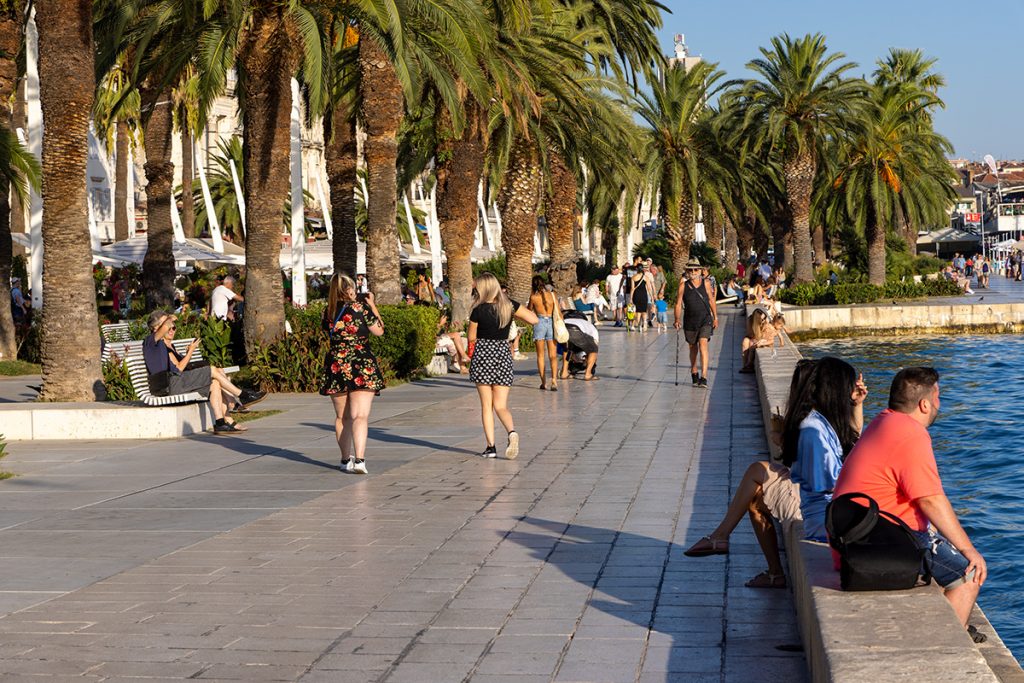
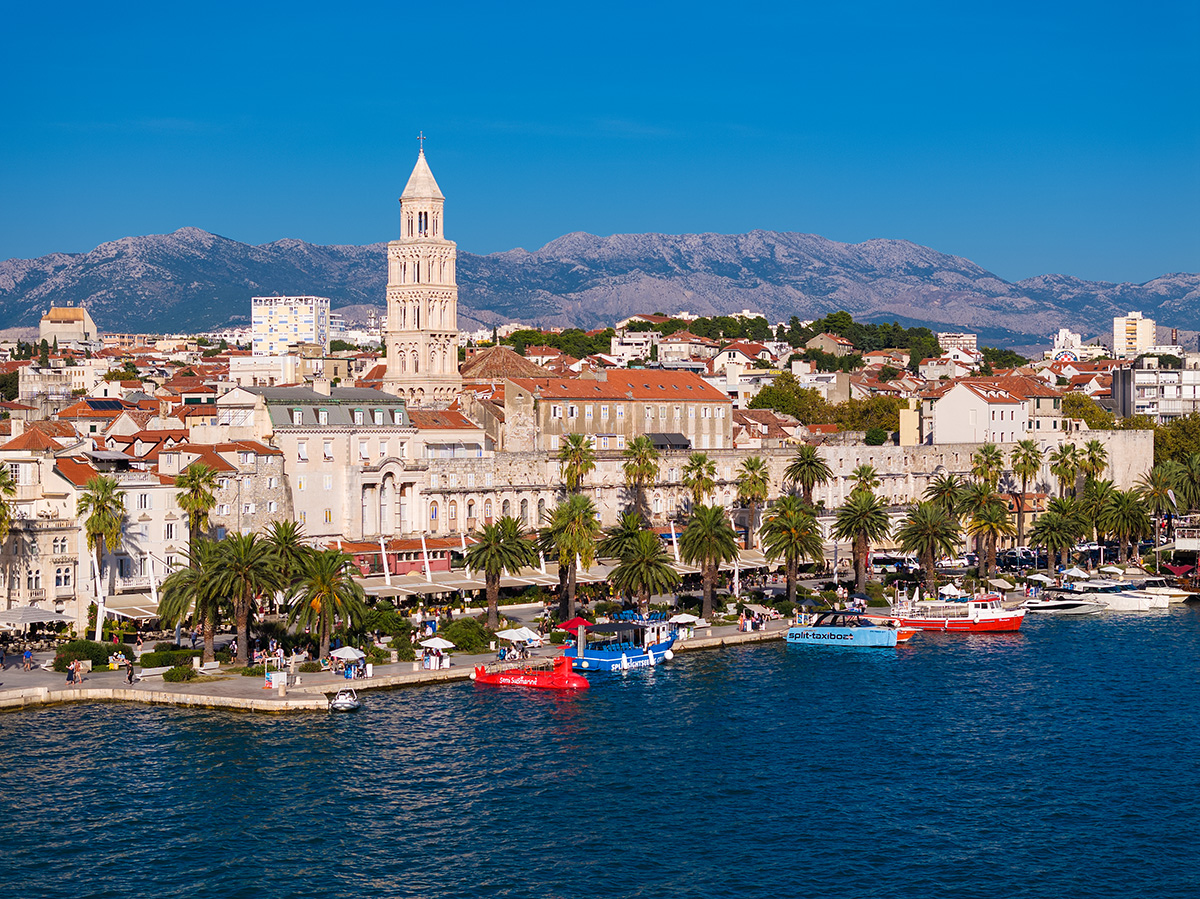
The Riva is Split’s seafront living room: palms, benches, ferries, kids on scooters, islanders coming and going. You’ll walk it many times, but it’s worth claiming one moment just to sit and absorb it – this is where the city’s rhythm is easiest to feel.
We use the Riva as both a morning and sunset ritual: coffee and people-watching before the day starts, then a slow stroll or drink as the sky softens and the lights come on. Plan at least 30–60 minutes without an agenda – no rush, no “next sight”.

💡 Insider tips:
We sometimes skip the priciest front-row terraces and grab a takeaway drink, then sit on the low sea wall facing the water. Same view, more relaxed.
4. Marjan Hill viewpoints & easy walks
Marjan is Split’s green escape: a pine-covered hill on the western side of town with paths, chapels and viewpoints over the Old Town, port and islands. A short climb takes you out of the crowds into shade, birdsong and big panoramas – it’s our favourite way to reset when the centre feels too full.
💡 Insider tips:
If you’re short on time, don’t feel guilty about doing just the “first terrace” viewpoint above the stairs and then heading back down. That one view alone gives you a perfect mental map of Split.
The most user-friendly version is the Vidilica viewpoint above the Old Town. From the palace you can be up there in 20–30 minutes, then linger another half hour with a drink or just the view. If you have more time, extend it into a 2–3-hour loop with extra viewpoints and a swim at Kašjuni or another Marjan cove. Aim for late afternoon into sunset rather than midday; the rock is very exposed, and the sun can be brutal in high summer.


🎟️ Discover tours & activities in Split
Prefer a guided experience for the palace, Old Town, food or sunset? Browse current Split tours with live prices and availability:
Booking through this widget helps support our work on Croatia Explore, at no extra cost to you.
5. Pazar market (Green Market) – morning life
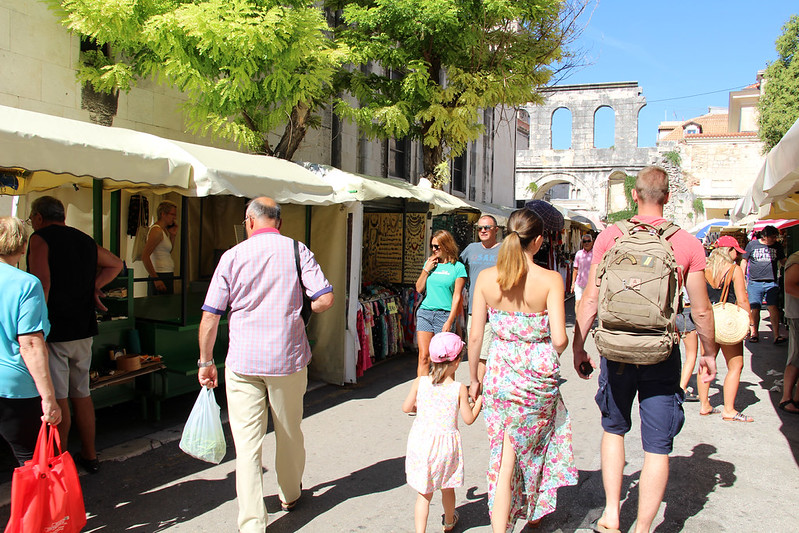
East of the palace walls, Pazar is where Split wakes up. Stalls of fruit, vegetables, herbs, cheeses, cured meats, flowers and everyday cheap-and-cheerful bits. It’s loud, colourful and wonderfully real – a good antidote to polished tourist streets.
Come early (around 7:30–9:30) before the heat sets in and the best produce disappears. You only need 30–45 minutes, but it can shape the rest of your day: pick up seasonal fruit, nuts and bakery treats for ferries, day trips or your apartment breakfast, and watch how locals greet the same vendors every day. Bring small cash and a tote bag; a card isn’t usually an option at smaller stands.

💡 Insider tips:
Look for whatever is clearly in season and sold on multiple stalls – piles of figs, cherries, grapes, tomatoes – and buy from the stall with the busiest locals, not just the prettiest display.
6. Bačvice beach – city sand & picigin
Bačvice is Split’s classic city beach: a shallow, sandy cove just east of the ferry port with cafés and bars behind it. On summer days it can feel chaotic, but it’s also one of those “only in Split” spots, especially when locals play picigin – a traditional ball game in the shallows where the whole point is to keep a small ball in the air with acrobatic jumps.
If you just want to say “I swam in Split”, give Bačvice 2–3 hours in the morning or late afternoon, when the sun is kinder, and there’s still energy without full noon intensity. For a calmer vibe, keep walking further along the coast path towards Firule and smaller coves. We often end up doing exactly that: check Bačvice, then drift one or two beaches further until the noise level feels right.


💡 Insider notes:
The water at Bačvice stays shallow for a long way, which makes it great for families and nervous swimmers, but less exciting if you like deep water. If you’re a confident swimmer, you might be happier at a Marjan cove after your “Bačvice moment”.
7. Marjan & city beaches – clearer water, more nature
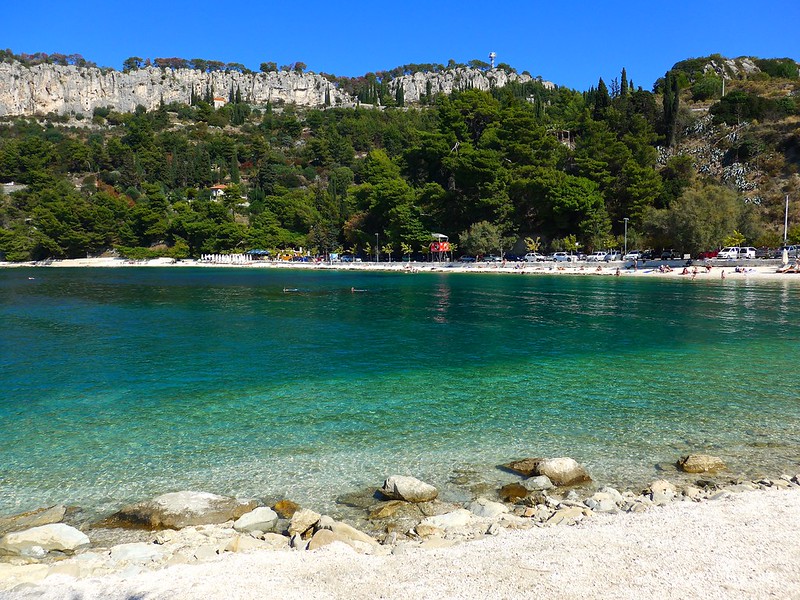
Beyond Bačvice, a string of beaches around Marjan – like Ježinac, Obojena and Kašjuni – offer clearer water and wilder scenery: pine trees, rock platforms, pebbles and cliffs. They’re still city beaches, but the setting feels more natural, and the water usually looks cleaner and bluer.
If you’re staying on the western side or near Meje, these are often the most logical “home” beaches. Combine a short Marjan viewpoint with a swim, and you’ve got a perfect half day: uphill for the view, downhill for the sea. In July–August, we prefer early mornings or anything after 17:00, when the sun is less brutal, and the colours are softer.

💡 Insider tips:
Many people bring rock shoes for Marjan’s rocky coves. If you don’t have them, look for smaller pebble entries or built concrete platforms with ladders that are easier on the feet.
8. Pick one museum or gallery that fits you
Split has several museums and galleries, but you don’t have to tick them all. We usually suggest choosing one or two that match your interests and using them as a midday escape when the streets are too hot.
If you’re into history and context, the city museum or archaeological collection help connect the palace and ruins to the wider Dalmatian coast. If you lean towards art and architecture, the Meštrović Gallery on the Marjan side combines sculpture, sea views and a calmer, almost villa-like feel – easy to pair with a nearby beach. Budget about 1–1.5 hours per museum, and treat it as a break rather than a race.


💡 Insider tips:
On a short Split stay we’d usually pick just one “indoor” stop and do it after lunch, when you’re grateful for shade and air-conditioning anyway.
9. Get lost in the hidden lanes of Varoš
Varoš climbs the slope under Marjan: a tangle of narrow lanes, stone houses, staircases and small chapels that used to be a fishermen’s and workers’ quarter. Today it’s a mix of old families, new apartments, guesthouses and a handful of konobas – more “village inside the city” than a formal attraction.
Come in the late afternoon or early evening, when the stone has cooled a little, and give it 1–2 hours. We like to wander upwards without a fixed route, pausing at small viewpoints over the roofs and sea, then either continue towards Marjan or loop back down towards the Riva for dinner. It’s not about finding one specific “photo spot”; it’s about the slow climb and how the city sounds different up here.


💡 Insider notes:
Varoš is full of stairs and uneven paving, so wear flat shoes even if you’re “just going for dinner nearby”. Your ankles will thank you.
10. A proper konoba dinner
At least one evening in Split deserves a slow konoba dinner – the kind with grilled fish, pašticada, black risotto, local wine and olive oil. It’s one of the easiest ways to feel where you are: sea on the plate, vineyards in the glass, Dalmatian pacing around you.
Book for after 19:00 and give yourself 1.5–2 hours so you’re not rushing. If you want one dish that feels very “Split”, look for pašticada s njokima (slow-cooked beef in a rich sauce with gnocchi) or a shared grilled fish platter with a side of blitva s krumpirom (Swiss chard with potatoes). We often time this for the evening after a big walking or beach day – it turns the whole day into a neat little story arc.
💡 Insider notes:
Ask what’s fresh that day rather than ordering only from the printed menu. If the server gets excited about a particular fish or dish, that’s usually the right answer.
11. Choose your own sunset bar or viewpoint
Every day in Split naturally leans towards sunset – the question is just where you’ll watch it from. That might be a terrace bar on or above the Riva, a simple bench on the waterfront, a Marjan viewpoint or a quiet corner near Kašjuni or another west-facing cove.
Aim to arrive 30–45 minutes before sunset so you see the whole colour shift and don’t feel rushed. We often skip the loudest bars and bring a takeaway drink to a calmer place with a view – it can be as simple as a low wall or a rock with a clear line to the horizon. Having “your” sunset spot makes Split days feel more deliberate and less like you’re just drifting from one random place to the next.

💡 Insider tips:
Check where your accommodation faces. If your balcony has even a partial sea or sky view, one of your best “bars” might be your own terrace with snacks from Pazar and a bottle of local wine.
Diocletian’s Palace — the real way to see it
Diocletian’s Palace is the heart of Split and, honestly, the reason the city exists the way it does today. It’s a 4th-century Roman palace built by Emperor Diocletian as his retirement home on the Adriatic – but the important part is this: over the centuries, it turned into a living city, not a fenced-off ruin.
When you walk through the palace today, you’re moving through apartment buildings, cafés, tiny shops, laundry lines and hidden courtyards that sit on top of Roman walls and columns. Streets follow the old Roman grid, gates still mark the entrances, and you can trace that original structure while at the same time watching everyday life happen around you.
We always plan Split days around the palace because it’s more than “one sight”. It’s a base, a landmark, a shortcut and a mood all at once – a place you cross ten times a day on the way to markets, beaches, ferries and dinners. Once you understand how the palace is laid out, the whole city becomes easier to navigate.

🏛️ Diocletian’s Palace in a nutshell (history, but useful)
• Built in the early 4th century AD as the retirement palace of the Roman emperor Diocletian, right on the Adriatic coast where he was born.
• Originally a mix between a luxury villa and a military camp: one side opened to the sea, the other sides were fortified with walls and towers.
• After the fall of the Western Roman Empire, people slowly moved into the empty palace – over centuries it filled with houses, churches and workshops, turning into the core of medieval Split.
• Today the palace and the surrounding historic centre form a UNESCO World Heritage Site. You’re not just visiting old stones – you’re walking through one of the best-preserved examples of a Roman palace that became a living city.
Best route through Diocletian’s Palace (self-guided loop)
This is the loop we actually walk ourselves and give to friends – it hits the main gates, squares and viewpoints, but still leaves space to get “pleasantly lost” in side lanes.
Think of it as a 1.5–2 hour core route, plus optional paid stops (cellars, Cathedral, bell tower) if you feel like going deeper.
🗺️ Self-guided route through Diocletian’s Palace (at a glance)
This is the loop we walk ourselves: start at the sea, move through the cellars and Peristyle, touch the Golden Gate and Grgur Ninski, then drift back towards the Riva. Think of it as a 1.5–3 hour route you can stretch or shorten, depending on how much you linger and which paid sights you add.
Step 1 – From the Riva into the palace underbelly
Enter through the sea-side Bronze/Brass Gate and walk the cellars to feel the scale of the original Roman palace.
⏱️ Quick: 10–15 min · Slow: 20–30 min
Step 2 – Peristyle & Vestibule
Come up into the Peristyle, then step into the circular Vestibule and feel how the sound and light change.
⏱️ Quick: 15–20 min · Slow: 30–40 min
Step 3 – Cathedral & bell tower (optional paid stop)
Decide if you’re going inside: Cathedral, crypt and the bell tower climb for a rooftop view over Split and the harbour.
⏱️ With visit: 30–60 min · Without: pass through
Step 4 – Jupiter’s Temple & narrow lanes
Follow the tight stone streets past Jupiter’s Temple towards the northern part of the palace.
⏱️ Quick: 10–15 min · Slow: 20–30 min
Step 5 – Golden Gate & Grgur Ninski
Exit at the Golden Gate, look back at the palace walls and meet the giant statue of Grgur Ninski in the park.
⏱️ Quick: 10–15 min · Slow: 20–25 min
Step 6 – Back through the lanes to Narodni trg
Re-enter the palace, wander southwest through everyday streets and arrive at Narodni trg (People’s Square).
⏱️ Quick: 15–20 min · Slow: 30–45 min (with a café stop)
Step 7 – Iron Gate & back to the Riva
Slip back inside via the Iron Gate and drift down to the Riva for a drink or your next Split stop.
⏱️ Quick: 10–15 min · Slow: 20–30 min
🔁 Whole loop: around 1.5–2 hours if you keep moving, up to 3–4 hours if you add paid sights, coffee stops and lots of photo pauses.
Diocletian’s Palace Tickets — what’s free and what you actually pay for
One of the most confusing things about Diocletian’s Palace is that there is no single “Palace ticket”. The whole historic core is an open urban area — you walk in and out for free as much as you like. You only pay for specific interiors and viewpoints inside the palace zone.
On our visits we always treat it like this:
- Free: use the palace as your main walking route (gates, lanes, Peristyle, Vestibule, most streets, one corridor of the cellars).
- Paid: choose 1–3 interiors that match your interests and energy that day (cellars, Cathedral complex, bell tower, Jupiter’s Temple, treasury).
Here’s how it breaks down in practice.
💸 What’s free inside Diocletian’s Palace
- Walking through all main gates (Bronze/Brass, Silver, Golden, Iron)
- Peristyle square and the Vestibule (the circular open-roof space)
- Most palace lanes and little squares
- The outer corridor of the cellars, where souvenir stalls are
- Exiting to Riva, Pazar market, Narodni trg and back again as often as you like
You can already have a fantastic palace experience without paying anything – especially if you time it well (early morning + after dark) and follow your self-guided loop.
🎟️ Paid sights inside Diocletian’s Palace (what’s worth it)
The palace itself is free to walk, but a few key interiors are ticketed. These are the ones most travellers consider – and how to decide which ones are right for you.
🧱 Palace substructures (cellars)
The big underground halls beneath the emperor’s residence. They mirror the layout of the palace above and give you a real sense of its scale, plus a cool, shady break in summer.
Worth it if: you like architecture/engineering, or want at least one indoor palace experience that’s easy to understand without tons of text.
⏱️ Time: about 20–30 minutes.
⛪ Cathedral of St Domnius + crypt + treasury
The former imperial mausoleum turned cathedral, with a small crypt and treasury. Compact but layered: Roman, medieval and later details all in one tight space.
Worth it if: you enjoy church interiors and want to see how the palace was reused over centuries – emperor, saints and stone all overlapping.
⏱️ Time: about 20–30 minutes.
🔔 Bell tower of St Domnius
A narrow stair climb with open arches and one of Split’s best viewpoints: red roofs, the Riva, harbour and islands all in one frame.
Worth it if: you’re comfortable with heights and want the classic Split panorama photo instead of just seeing it on postcards.
⏱️ Time: about 20–30 minutes, depending on queues and how often you stop on the stairs.
🏺 Jupiter’s Temple (baptistery)
A small but atmospheric former Roman temple, later turned into a baptistery. Darker, intimate and very “old stone”.
Worth it if: you’re already nearby and enjoy compact historical interiors that you can absorb in a few minutes without rushing.
⏱️ Time: about 10–15 minutes.
💬 Our usual combo on a first visit: cellars + Cathedral complex + bell tower. If you’re tighter on time or budget, pick just one “inside” (cellars) and one “view” (bell tower) and enjoy the rest of the palace for free.
There are usually combined ticket options for the Cathedral complex (Cathedral, crypt, treasury, baptistery, bell tower). The exact combinations and prices change, so we always check the board by the Cathedral entrance on arrival and decide on the spot.
👣 Prefer a guide? Small-group palace & Old Town tours
If it’s your first time in Split and you don’t feel like decoding 1,700 years of history on your own, a small-group walking tour of Diocletian’s Palace and the Old Town can be a good shortcut. You get the main stories, orientation and practical tips in a couple of hours – then you can come back later and enjoy the lanes at your own pace.
Look for tours that keep the group size reasonable and cover the Palace, Peristyle, Cathedral area and key squares, with time for questions. In high season, booking ahead also helps you avoid wandering from kiosk to kiosk in the heat.
🔗 Check palace & Old Town tours on GetYourGuide →By booking through this link you support our work on Croatia Explore at no extra cost to you. We only recommend tours and tools we’d genuinely consider for our own trips.
Where to stay in Split
In Split, your base decides how your days feel: whether you fall asleep to bar noise in narrow stone lanes, wake up two minutes from the Riva, or stroll down to the beach for a pre-breakfast swim. The city is compact, but the difference between sleeping inside Diocletian’s Palace, behind it in Varoš, or down by Bačvice beach is huge once you add heat, luggage and early ferries into the mix. Over several stays we’ve tried both the “in the middle of everything” and the quieter belt just outside the walls, and that’s the perspective this section is built on.
Best areas to stay in Split
🗺️ Split neighbourhood map
Use this map to see where the main areas sit — Diocletian’s Palace & Old Town, the central belt behind the Riva, Varoš on the hillside, Bačvice & Firule beaches, Žnjan/Trstenik, and the Marjan edge — and to check live accommodation availability, real-time prices and book your stay directly.
Diocletian’s Palace & Old Town (inside the walls)
Atmospheric, historic, intense. You’re sleeping in a Roman palace turned living city: cafés under arches, tiny bars in courtyards, stone alleys that stay lively late. Perfect if you want to be in the middle of everything, step out into the action, and don’t mind sound carrying at night. Not great for light sleepers, heavy luggage, or anyone who hates stairs.
Just outside the Palace & Riva (central belt)
The sweet spot for many first-timers. You’re still only a few minutes’ walk from the Palace, Riva and ferry port, but streets are a bit wider, buildings more modern, and noise levels easier to control. This is where we keep coming back: close enough for dawn ferries and late dinners, far enough that you can actually rest.
Varoš (hillside above the centre)
White stone houses, stepped lanes, glimpses of the sea — and a more “lived-in” feel. Varoš climbs the hillside behind the old town and towards Marjan Hill, so expect slopes and steps, but also a calmer, village-like atmosphere once you’re a few streets up. Good for couples and longer stays who want character and quieter evenings, and don’t mind a 10–15 minute walk into the very centre.
Bačvice & Firule (city beach zone)
This is Split’s classic city-beach strip. Bačvice is famous, sandy and social (shallow water, picigin, beach bars), while Firule is a bit softer and more local-feeling. You trade some old-town immediacy for morning swims and easier beach access. Good if your Split time is “swim + stroll into town”, less ideal if you want to be on the Riva in under five minutes.
Žnjan & Trstenik (modern seafront)
Further along the coast, with a newer promenade, modern apartments and long stretches of beach clubs and pebble beaches. Great if you want sea views, space and parking, or if you’re happy to use buses/Uber to hop into the centre. Feels more like a contemporary coastal district than a historical core.
Marjan edge (Spinut / Meje area)
Green, scenic and a bit more residential. Staying near the foot of Marjan means easy access to coastal walks, little coves and viewpoints, with the old town reachable on foot or by a short ride. Good for people who prioritise nature and quieter surroundings, and are happy to “go into town” rather than be inside it.
Hotel picks in Split (by area & budget)
When we book Split, we always start with two things: area first, then budget. Do we want to be inside the old town maze, step out straight onto Bačvice beach, or wake up in a modern seafront hotel with pools and parking? Once that’s clear, we look for a property that cuts down friction: realistic walking times, decent soundproofing, and easy access for arrivals and departures.
Below are hotels in different neighbourhoods and price ranges — from palace-boutique to classic beachfront, wellness-focused and a very good-budget option.
🛏️ Our favourite hotels in Split (by area & budget)
Different budgets, different vibes, different neighbourhoods. These are the types of hotels we’d genuinely look at first when planning a Split stay – the photos and links below are our handpicked options with our own affiliate URLs.
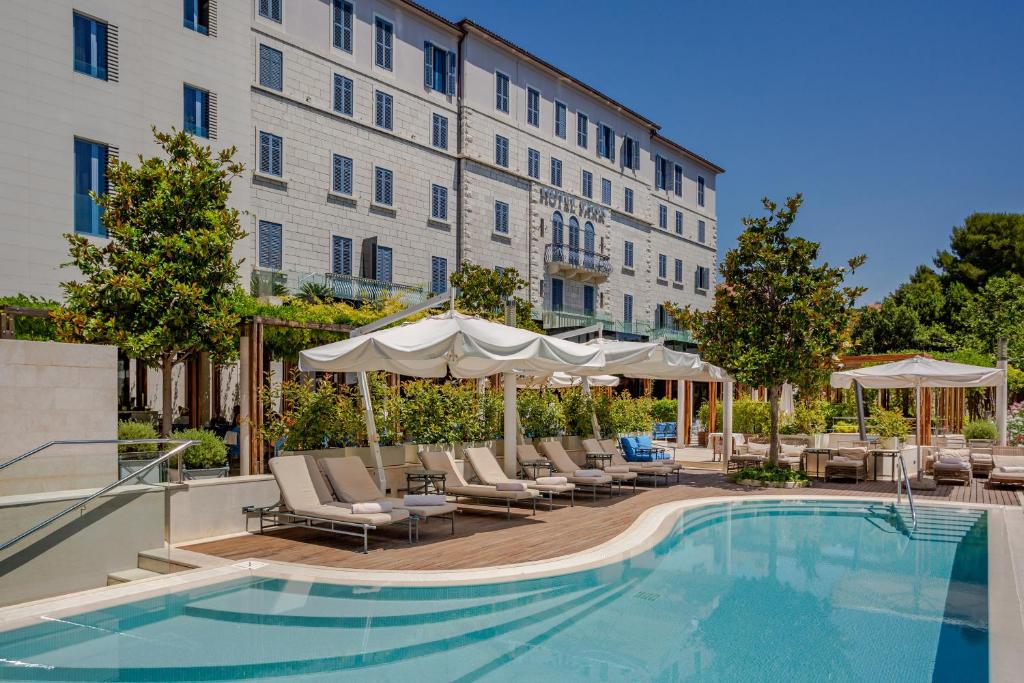
💎 Hotel Park Split (Bačvice, luxury)
Who it’s for: travellers who want a classic 5★ hotel with a “city-meets-beach” feel and full service.
Why stay: historic Split landmark with a pool, spa and excellent location just above sandy Bačvice beach – you get both sea and easy access to the centre.
Walking time: roughly 10–15 minutes to the Riva/Old Town; steps from the main city beach.

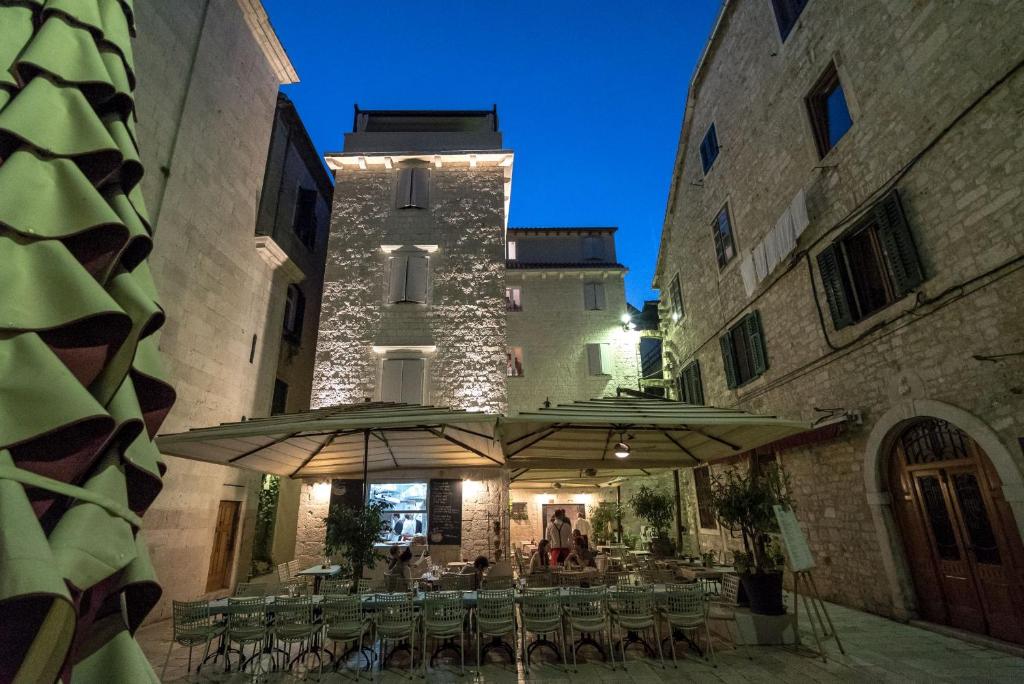
🏛️ Murum Heritage Hotel (Old Town boutique)
Who it’s for: couples and history-lovers who want to sleep inside the palace walls in a small, refined boutique.
Why stay: intimate feel, layers of stone and history, and a location that puts you right in the middle of Split’s UNESCO core.
Walking time: seconds to the Palace lanes and a couple of minutes to the Riva.
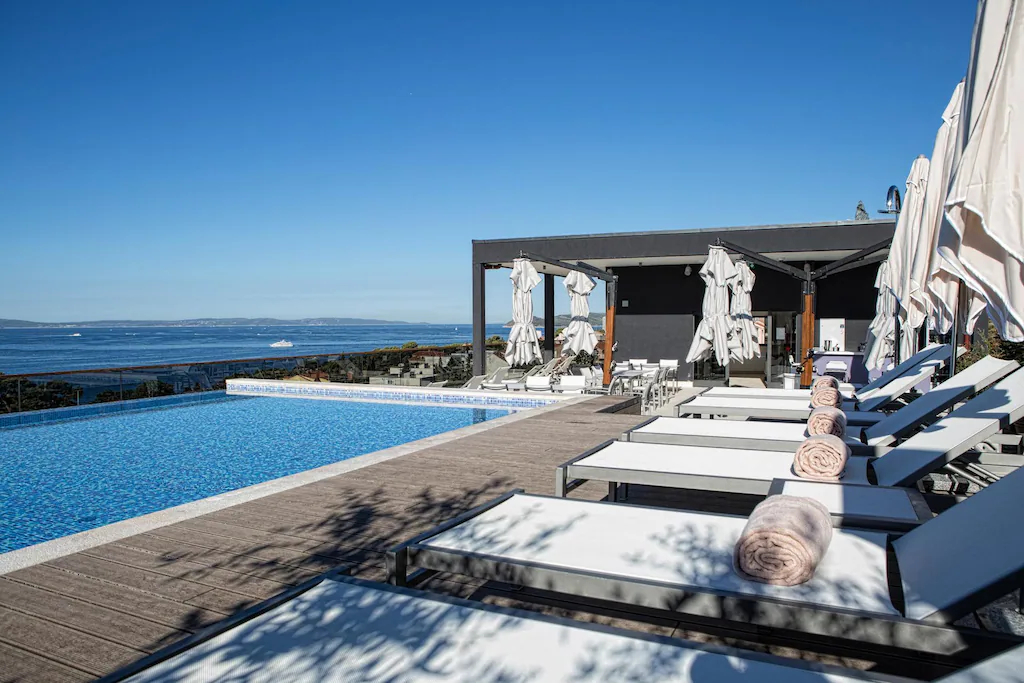
🌿 Marvie Hotel & Health (wellness, upper-midrange)
Who it’s for: travellers who like a modern feel, spa/wellness facilities and being between the beaches and the centre.
Why stay: rooftop infinity pool, indoor pool and spa zone, with Firule/Trstenik beaches and the Old Town both within easy reach.
Walking time: roughly 20 minutes to the Old Town; only a few minutes to the nearest beach.

🌅 Radisson Blu Resort & Spa (seafront resort feel)
Who it’s for: guests who want a proper resort vibe – pools, spa, beach access – and don’t mind a short ride into the Old Town.
Why stay: modern seafront hotel with spa, beach area and views towards the islands, in the Žnjan/Trstenik area.
To the centre: about 3 km to the Old Town – think short taxi/Uber rather than a daily walk.

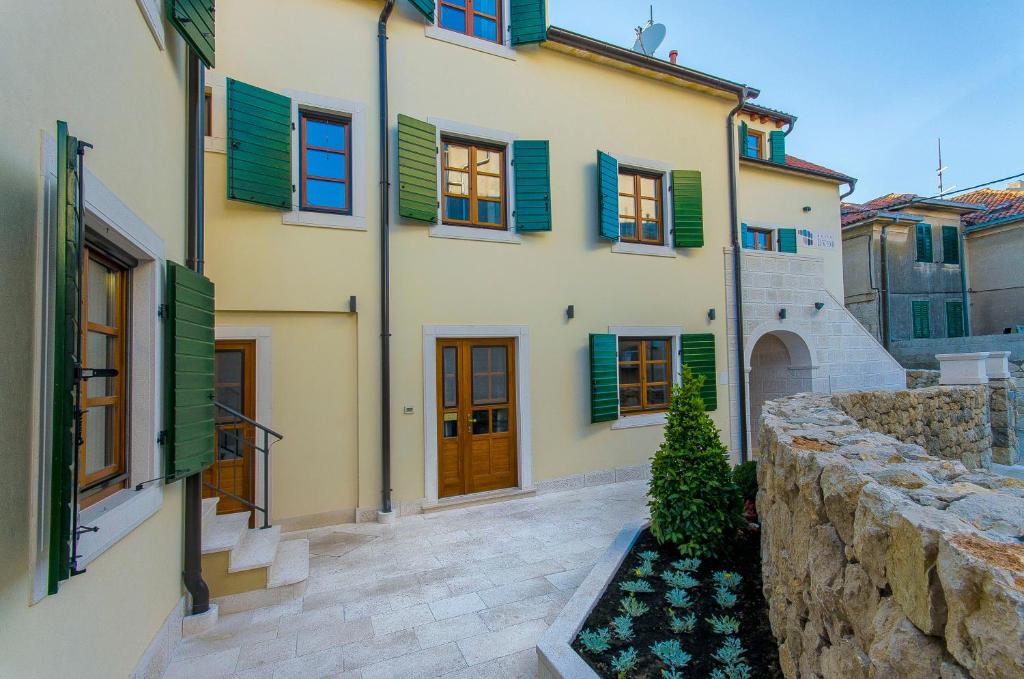
💶 Hostel Dvor (budget, near centre)
Who it’s for: solo travellers and budget-conscious guests who still care about design, cleanliness and a good location.
Why stay: well-rated rooms and dorms, nice common areas and a position in a quieter part of the central area, within walking distance of the Old Town.
Walking time: about 8–10 minutes to the Riva and Diocletian’s Palace.

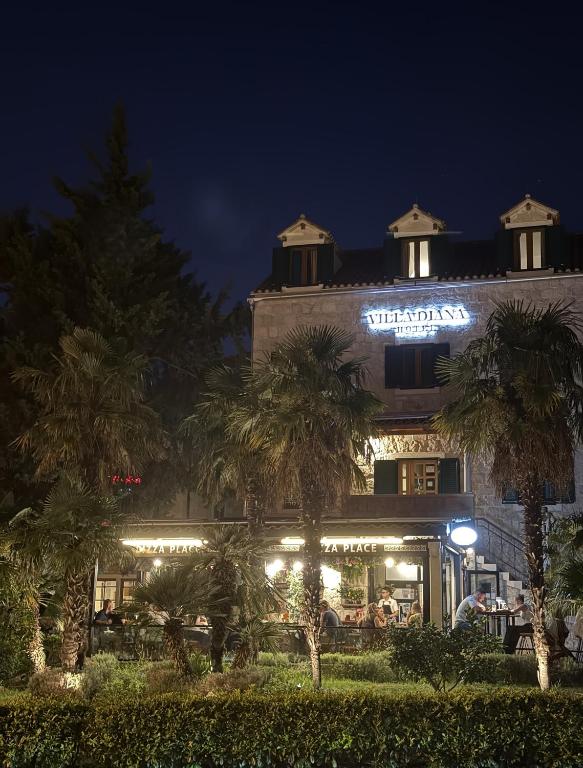
💸 Hotel Villa Diana (budget-friendly, near centre)
Who it’s for: travellers who want a small, family-run hotel instead of a hostel, with an easy walk to the Old Town and ferry port.
Why stay: long-running local hotel with friendly staff, clean rooms and a good breakfast – convenient if you’re arriving by bus or boat and want a straightforward base.
Area vibe: edge of the centre near the port – short walk to the Riva and market, more “everyday city” than the quietest old-town lanes.
Apartment vs hotel in Split (what to know)
Split is full of cute apartments in stone houses and small hotels in reworked historic buildings. Both can be great — as long as you understand the trade-offs.
When a hotel is easier
- Late arrivals / early departures: if your flight or ferry timing isn’t friendly, a reception and clear check-in process remove a lot of stress.
- Big luggage or mobility issues: some historic buildings have lots of stairs and no lift; hotels are more likely to have easier access and help.
- Short stays: with just 1–2 nights, you don’t really benefit from a kitchen; it’s more important that check-in, storage and location are friction-free.
When an apartment makes sense
- Longer stays / families / working trips: more space, a kitchen and sometimes laundry make everyday life simpler and often cheaper.
- Living like a local: you’re more likely to end up in a residential lane, with a bakery or small shop you start using daily.
- Better value per m²: outside absolute peak dates, apartments can give you more space for similar money.
What’s specific to Split apartments
- Stairs and old stone: inside and around the Old Town and Varoš, expect lots of steps, sometimes narrow stairwells and entrances you’d walk past without a photo in your phone.
- Noise and echo: stone lanes bounce sound; a “quiet street” can still carry bar noise and footsteps later than you’d expect, especially in peak season.
- Check-in logistics: hosts might need you to message them when you’re nearby, meet at a landmark, or navigate by photo directions. This is fine if you’re not exhausted and not dragging huge suitcases in the heat.
Parking reality
- The Palace/Old Town is pedestrian – you will not drive to your door.
- Varoš and Marjan-side streets can be narrow and steep; parking is often limited or paid.
- Žnjan/Trstenik and parts of the newer seafront are much better if you want hotel parking or easier street parking and quick access to the coastal road.
As a rule: if you’re new to Split, arriving late, or travelling in peak summer with luggage and heat, a well-located hotel (central belt, Bačvice, or seafront) is usually the least stressful first choice. If you’ve been before or you’re staying longer, apartments start to win.
🏠 Our top apartment picks in Split
When we book apartments in Split, we usually look for three profiles: one on the edge of the Old Town for atmosphere without too much noise, one in a quiet central street that’s easy with luggage, and one in the Bačvice/Firule beach zone for daily swims.

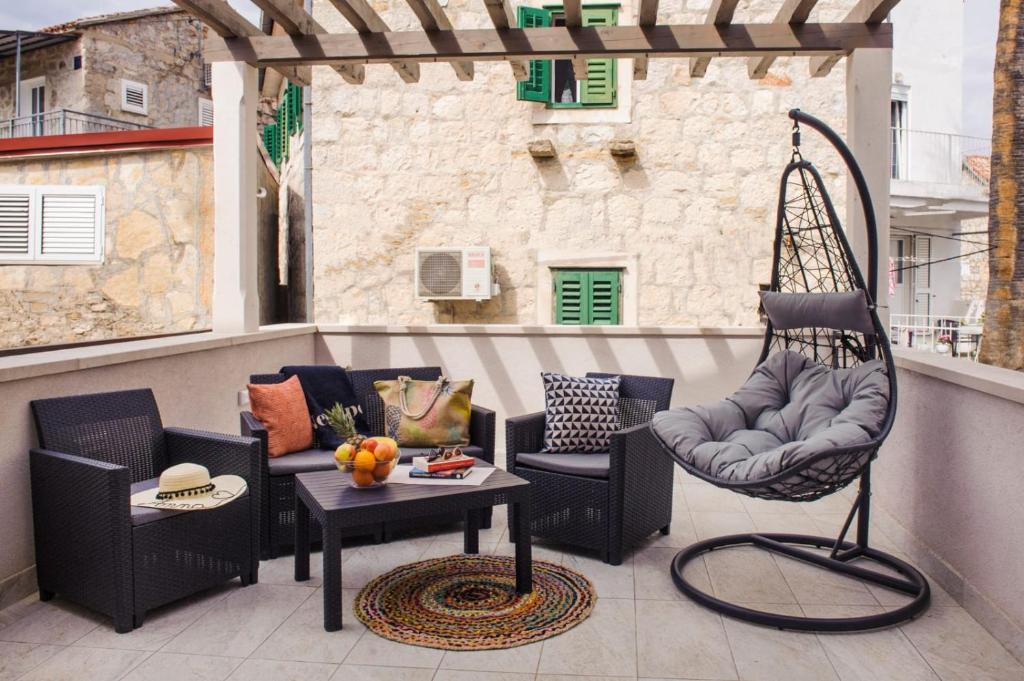
🏛️ Luxury Apartments A&A – Old Town edge
Best for: couples (or a small family) who want to be in the historic centre, but in a slightly quieter corner rather than right on the loudest lanes.
Why we like it: stylish, spotlessly clean apartments with balconies/terraces, strong A/C and a host that guests consistently praise for great tips and communication – ideal for first time in Split.
Area vibe: 5–10 minutes’ walk to the Palace, Riva and Marjan steps; central but noticeably calmer at night than the noisiest bar streets.
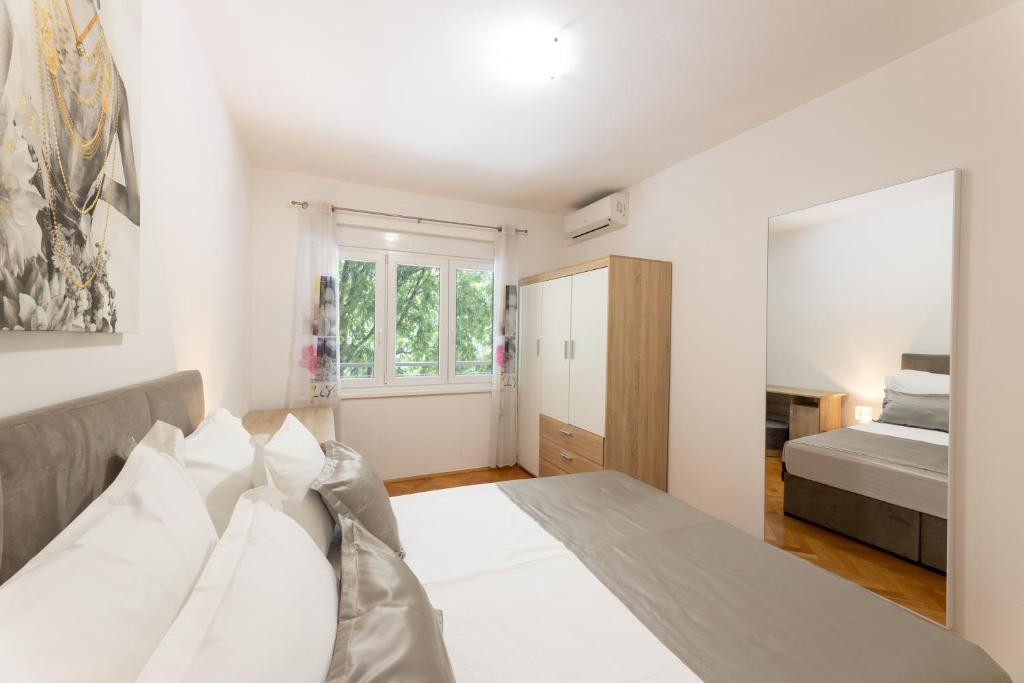
🚶 Apartment Central to Beach & Old Town
Best for: first-timers and families who want a big, comfortable base just outside the walls – easy for both sightseeing and beach time.
Why we like it: generous rooms, strong air-con and very clean, with reviews highlighting how simple it is to walk into the Old Town and down to the beach, even with kids and bags. :contentReference[oaicite:3]{index=3}
Area vibe: practical central street – more “local life” than touristy, but still only a short walk to the Riva, ferries and Bačvice.
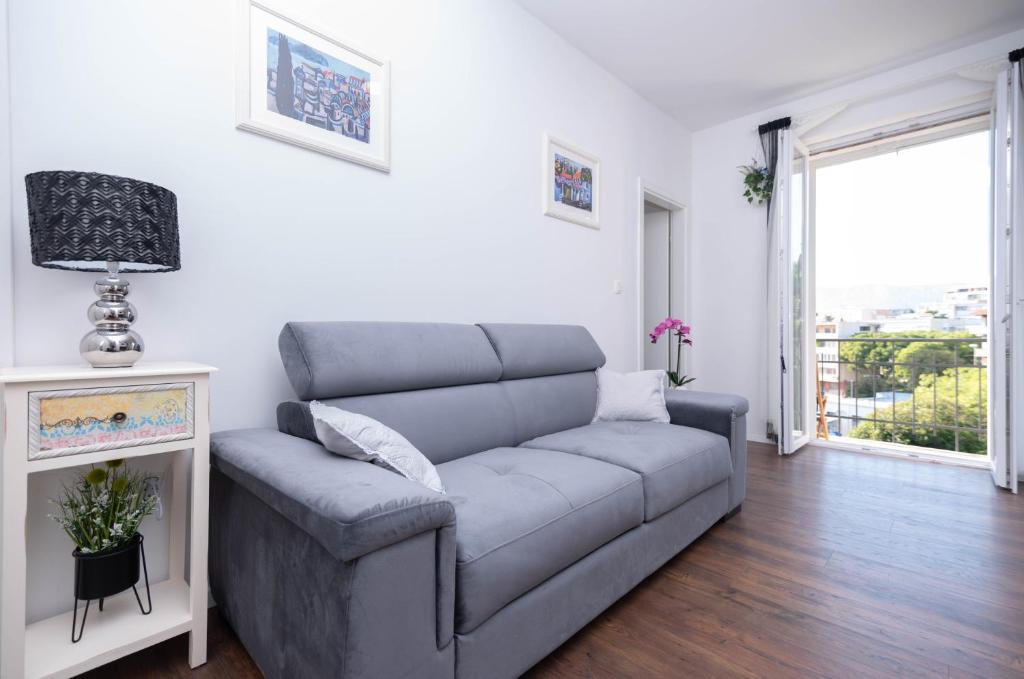
🌊 Charming apartment close to Bačvice beach
Best for: beach-first travellers and small groups who want a proper “sea & city” combo – mornings on the sand, evenings in the Old Town.
Why we like it: two bedrooms plus a living room and a sun terrace, just a short walk from Bačvice and Ovcice beaches, with the centre still within easy reach on foot. :contentReference[oaicite:4]{index=4}
Area vibe: classic Bačvice zone – daytime families and swimmers, evenings with a soft holiday buzz and sea views.
Food in Split: what to eat + where to go
Split is very “what you see is what you get” with food: simple ingredients, lots of olive oil, grilled things, and portions that make sense for a hot coastal city. The main trap isn’t bad food, it’s paying too much for something average because you sat at the first terrace on the Riva or inside the tightest palace lane.
When we plan meals here, we think about three things:
- What we want (seafood vs meat vs “we’re tired, just pizza”),
- Which area we’re in (Old Town vs quieter belts vs beach zones),
- And how much energy we have (long konoba dinner vs quick marenda or bakery).
Once you know what to look for, it’s easy to eat well without turning every meal into a research project.
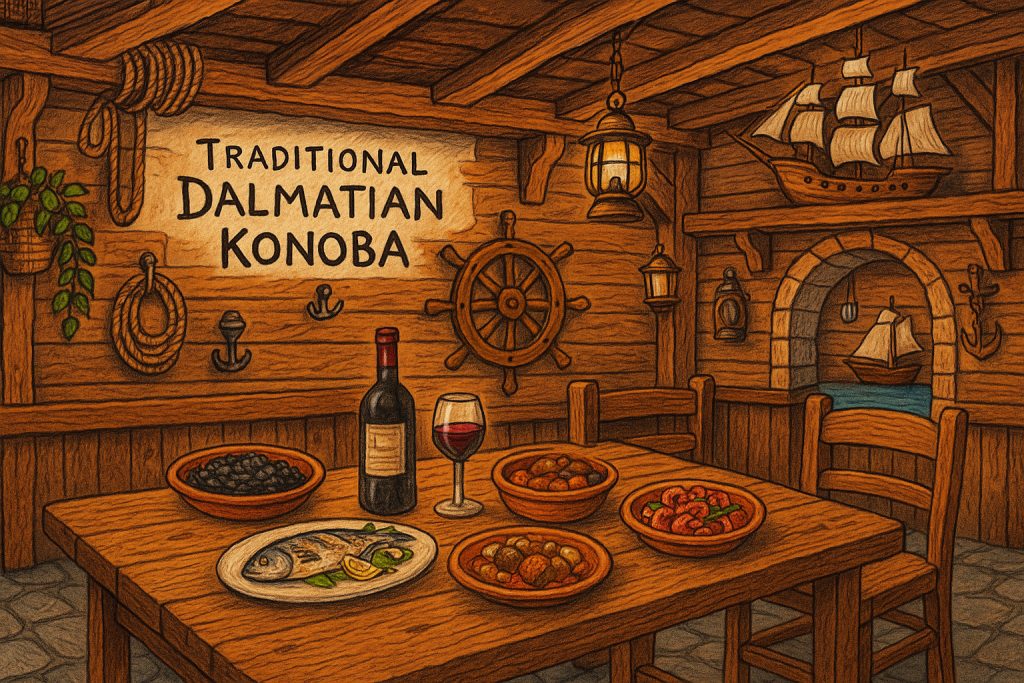
What to try (short list)
You don’t need a long checklist. If you cover a few of these, you’ll get a good feel for Split and Dalmatian food:
Pašticada s njokima
Slow-cooked beef in a rich, slightly sweet-sour sauce, usually served with homemade gnocchi. This is the “special occasion” dish and a very Dalmatian thing to order at least once. Good for an evening konoba dinner.
Grilled fish + blitva s krumpirom
Fresh whole fish, simply grilled, with chard-and-potato on the side. You usually pay by weight, so always ask the approximate weight and price before you agree. Great way to actually taste the sea instead of heavy sauces.
Crni rižot (black risotto)
Squid/cuttlefish risotto coloured with ink. Tastes far better than it looks if you like the sea. Often served as a starter portion – perfect to share.
Buzara (mussels or scampi)
Shellfish cooked in white wine, garlic, parsley and olive oil, sometimes with tomato. You want bread here to mop up the sauce. Light but very satisfying.
Peka
Meat or octopus slow-cooked under an iron lid with potatoes and vegetables. It’s more common slightly outside Split or in inland konobas, and you usually have to order it a day / several hours in advance. Worth doing as a planned “experience” rather than something you stumble on.
Soparnik (if you see it)
A thin savoury pie with chard and garlic, originally from the Poljica area near Split. You won’t find it everywhere, but if you do, it’s a very local snack to try.
Local sweets: fritule & rožata
Fritule are little fried dough balls (like tiny doughnuts), often sold at stalls or markets. Rožata is a Dalmatian-style caramel custard. Both are easy ways to end a meal without overthinking.
Wine & olive oil
Look out for Plavac Mali (red) and Pošip / Debit (white), and don’t be afraid of house wine in konobas – it’s often totally fine, especially for easy drinking. Good olive oil is standard; if it’s particularly good, you’ll notice quickly.
Dive into our guide to eating in Croatia.
Vegetarian / seafood / budget tips
Vegetarian in Split
Traditional konoba menus are built around fish and meat, but vegetarians are not doomed:
- There are usually risottos, pasta dishes, grilled vegetables, salads and sides like blitva s krumpirom that can be combined into a decent meal.
- Pizza places are everywhere and often very good for vegetarians.
- If you’re strict, it helps to look at menus online in advance and aim for more modern bistro-style places, which tend to label vegetarian options clearly.
Useful phrase:
- “Bez mesa, molim” = without meat, please.
Be aware that some places don’t consider fish “meat” in the same way, so clarify if fish is also off the table.
Seafood: how to avoid surprises
- For whole fish, always ask: how much it weighs, what the price per kilo is?
- Check if sides are included or separate – sometimes the price is just the fish.
- Don’t be scared of house wine with; it often pairs very well with food and is more budget-friendly than fancy bottles.
If you want seafood but are watching costs, share one grilled fish plus a portion of black risotto or buzara between two people and fill up with sides and salad.
Budget-friendly ways to eat well
- Marenda (late breakfast / early lunch deals): some places offer cheaper daily specials around late morning to early afternoon. Look for boards with one or two dishes written up.
- Bakeries (pekara): everywhere; great for quick snacks (burek, sandwiches, pastries) before ferries or bus rides.
- Markets + apartments: if you’re in an apartment, buy fruit, cheese, tomatoes, olives and bread at Pazar or the fish market and make one meal a simple picnic.
- Step one street back: often you save a few euros per person just by leaving the absolute first line on the Riva or the tightest palace lanes.
Tipping & extras
- Service is usually included in the menu prices, and in Croatia there is no rule/need for tipping. That being said, rounding up or leaving 5–10% for good service is appreciated.
- Bread and couvert (small starter fee) might appear on the bill even if you didn’t specifically ask – this is fairly standard, but if you really don’t want it, say no (or ask if its comlimentary) when it’s brought to the table.
Our go-to spots in Split (restaurants, konobas, cafés)
These are the kinds of places we’d send a friend to – a mix of classic konoba, simple fast food, and good coffee/sweets. Always double-check opening hours and consider reservations in high season.
Buffet Fife – casual Dalmatian classic by the sea (Matejuška side)
Hearty tavern along Trumbićeva obala, a few minutes’ walk from the western end of the Riva. Expect big portions of simple Dalmatian dishes (grilled fish, stews, pašticada, sauerkraut, black risotto) at fair prices, wooden benches, and a lively, slightly chaotic vibe. It’s very popular with both locals and visitors and definetly a great value spot for traditional food near the centre.
- Good for: your “one big hearty Dalmatian meal”, especially for lunch or an early dinner.
- Area vibe: seafront but more relaxed than the main Riva strip.
- Tip: it gets busy – go early or be ready to wait a bit. Must try their black rissotto.
Konoba Fetivi – traditional konoba near Varoš / west harbour
Family-run konoba just behind St. Francis church, close to the western harbour and Varoš. Known for fresh seafood, black risotto, grilled fish and classic meat dishes, with ingredients sourced daily from local markets and a laid-back, homey feel. It’s in the Michelin guide but still feels like a proper konoba, not a fine-dining showpiece.
- Good for: a “treat yourself” konoba dinner focused on fish and seafood.
- Area vibe: just outside the tightest palace core, easy walking distance but calmer.
- Tip: reserve ahead in season – small space, high demand.
Ma:Toni – modern Dalmatian food near Bačvice
Basement restaurant in a stone building a short walk from Bačvice beach. The menu is a modern take on Dalmatian food – think updated classics, some interesting meat dishes and a few thoughtfully done vegetarian options, all in a cool, slightly underground setting with good wine.
- Good for: one nicer, more creative dinner that still feels local.
- Area vibe: between centre and Bačvice, handy if you’re staying in the beach zone.
- Tip: nice choice if you want something less heavy than a traditional “everything grilled” meal.
Kantun Paulina – ćevapi institution (fast, cheap, filling)
Tiny corner spot in the central belt (Varoš side of the Old Town), famous for ćevapi in lepinja with ajvar and onions. Pure fast-food energy: you order at the counter, eat on the go or perch outside. It’s repeatedly described as one of the best places in Split for proper ćevapi and cheap, satisfying meat-in-bread.
- Good for: quick lunch or late, simple dinner when you don’t want a full sit-down meal.
- Area vibe: busy, central, lots of locals grabbing a bite.
- Tip: queues can look intimidating but move quite fast.
Bokeria Kitchen & Wine – polished, central dinner spot
Stylish restaurant in the Old Town with a modern Mediterranean menu, strong wine list and big, buzzy interior. It shows up on almost every “where to eat in Split” list and works well if you want one more polished, city-night dinner right in the historic core.
- Good for: couples/friends who want atmosphere + good food in one place.
- Area vibe: deep in the Old Town; expect higher prices and the usual summer crowds.
- Tip: book ahead for evenings in high season.
D16 Coffee – specialty coffee in the palace
A specialty coffee bar tucked inside the palace area, run by people who take coffee seriously (single-origin beans, proper espresso, filter, cold brew). It’s often singled out as one of the best cafés in Split for coffee quality.
- Good for: your “I need real coffee, not just any espresso” moments.
- Area vibe: central but slightly tucked away, good for a short pause in the shade.
- Tip: useful as a midday retreat when the stone alleys get too hot.
Luka Ice Cream & Cakes – dessert stop behind the theatre
Ice-cream and cake shop in a quieter courtyard near the Croatian National Theatre, often described as one of the best spots in Split for gelato and cakes, with some interesting flavours (lavender, rosemary yogurt, seasonal fruits).
- Good for: evening gelato walk or a mid-afternoon sugar break.
- Area vibe: a little away from the main palace drag, but still an easy walk.
- Tip: portions are big – you probably don’t need three scoops, even if you think you do.
Best Day Trips from Split
Split is a proper base city: ferries, buses, tours and rental cars all fan out from here, so it’s easy to add one or two big day trips without dismantling your whole itinerary. What matters most is matching your energy + season + transport style to the right place:
- islands if you want sea and slow lanes,
- national parks if you’re okay with long-ish drives,
- culture days if you prefer short hops and more time on your feet than on the road.
Below is how we look at day trips when we plan routes for ourselves and friends.
🚤 Best day trips from Split – quick comparison
| Destination | Time from Split (one way) | Best for | DIY vs tour | Season notes |
|---|---|---|---|---|
| Hvar Town | ~50–55 min catamaran | Lively Old Town, harbour views, bars | Easy DIY; tours good if you want Hvar + swims | Very busy July–Aug; lovely shoulder season |
| Brač (Supetar/Bol) | 45–50 min ferry to Supetar; ~1 h fast boat to Bol | Beaches, Zlatni Rat, island villages | DIY with ferry + bus/taxi; boat tours for easy Zlatni Rat | Peak summer = busy beaches; sea best Jun–Sep |
| Šolta | ~30–60 min ferry to Rogač | Quiet coves, simple konobas, slower pace | DIY or small boat tours with swim stops | Stays fairly calm even in high season |
| Krka NP | ~1–1.5 h by car/bus | Waterfalls, easy walking, nature day | DIY possible; tours very convenient | Crowded in summer; spring/autumn are softer |
| Plitvice Lakes | ~3 h by car/bus | Iconic lakes and waterfalls | Tours simplify a very long day; DIY for confident drivers | Can be crowded; beautiful spring & autumn, cold winters |
| Trogir | ~30 min bus/boat | Compact old town, cathedral, promenade | Very easy DIY; also part of many boat tours | Great all year; evenings in summer are lively |
| Klis Fortress | ~25–30 min bus/car | Fortress, views, GoT filming site | Easy DIY; sometimes combined in small tours | Best on clear days; can be windy/exposed |
| Salona (Solin) | ~20–30 min local bus | Roman ruins and open archaeological site | DIY or paired with Klis on history tours | More comfortable in cooler parts of the day/year |
Islands you can do in a day
You can technically day-trip to many islands from Split, but in reality three make the most sense: Hvar, Brač and Šolta. Anything further usually feels rushed unless you’re on a speedboat tour.
Hvar (Hvar Town)
– buzzy + “I’ve been to Hvar” factor. Read our Hvar Island Guide
- Travel: fast catamarans Split–Hvar Town usually take about 50–55 minutes each way.
- Best for: people who want a lively Old Town, views, bars and a “name” island. Great if you care about saying you’ve seen Hvar Town.
- DIY vs tour:
- DIY is easy if you’re comfortable buying catamaran tickets and navigating on your own.
- A boat tour works better if you want Hvar plus swimming stops/nearby bays in one go.
- What the day looks like: coffee on the harbour, climb to Fortica fortress, wander lanes, swim at one of the town beaches or hop a taxi boat to Pakleni islands, back by evening catamaran.
- Season note: in peak summer Hvar Town is busy and hot; shoulder-season Hvar can feel much gentler.
Brač (Supetar or Bol)
– beaches + views + more relaxed than Hvar. Explore Brač in our guide
- Travel: ferries Split–Supetar take roughly 45–50 minutes; there are also fast boats directly to Bol (~1h05).
- Best for:
- Bol + Zlatni Rat if you want the famous beach plus clear water,
- or Supetar / other villages if you prefer an easier, closer taste of island life.
- DIY vs tour:
- DIY works well for Supetar or if you don’t mind combining ferry + local bus/taxi to Bol.
- A day tour by boat is easier if you specifically want Zlatni Rat without thinking about bus timetables.
- What the day looks like: ferry to Supetar, explore a bit, then bus/taxi to Bol and Zlatni Rat; swim, walk the promenade, maybe a short hike for a viewpoint if it’s not too hot.
- Season note: beaches get crowded in July–August, but water is at its best.

Šolta (Rogač)
– slower island, closest feel to “local escape”
- Travel: ferries Split–Rogač normally take 30–60 minutes depending on the route and operator.
- Best for: travellers who want quiet coves, villages, simple konobas and a softer, less “Instagram-must” vibe.
- DIY vs tour:
- DIY is very doable (ferry + local buses/taxis to villages and bays like Maslinica or Nečujam).
- There are also boat trips that combine Šolta with swimming stops.
- What the day looks like: morning ferry, move on to a village or bay, long swim + lunch, late afternoon return.
- Season note: feels pleasantly sleepy even in high season compared with Hvar/Brač; great choice if you want to escape crowds rather than chase them.

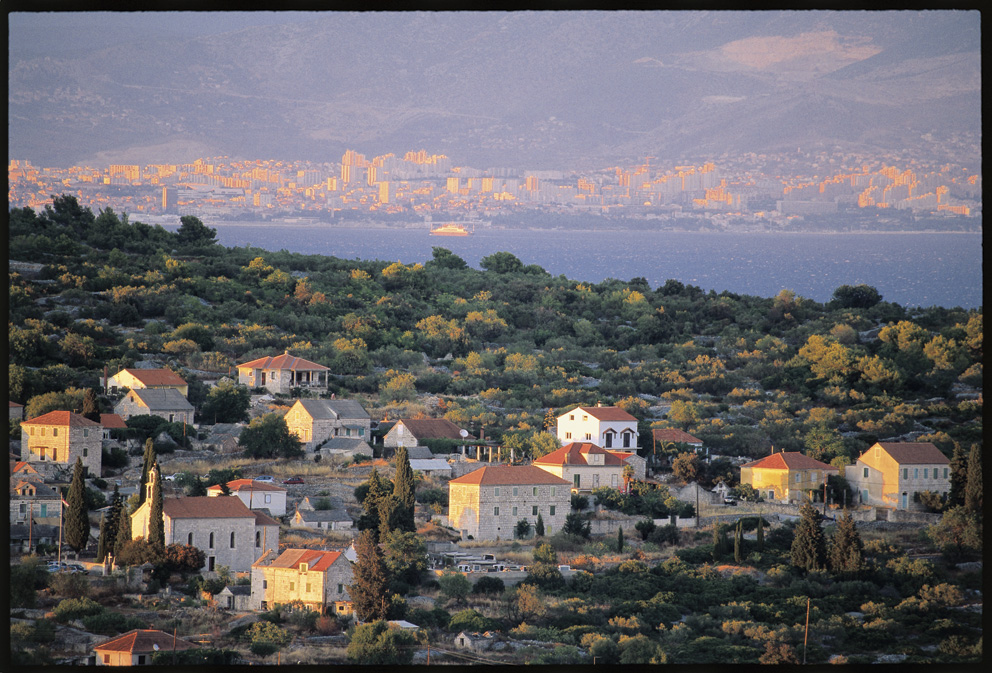
Nature day trips
Krka National Park
– waterfalls + greenery, realistic in a day. Read the ultimate Krka NP Guide
- Travel time: around 1–1.5 hours by car or organised bus from Split, depending on traffic and exact route.
- Best for: people who want a single nature day with waterfalls, easier walking and a mix of viewpoints + boat sections (depending on route and season).
- DIY vs tour:
- DIY: drive from Split, park near Skradin or Lozovac, buy tickets, navigate park routes yourself.
- Tours: take care of transport, tickets logistics and basic orientation, sometimes combining Krka with Šibenik.
- What’s realistic:
- A standard day trip gives you several hours inside the park, time to walk main loops, use shuttles/boats where included, and have lunch.
- You’ll be back in Split for dinner without feeling like you’ve crossed half of Croatia.
Krka is the easiest national park day trip from Split and the one we normally recommend first if you only want one park.

Plitvice Lakes
– iconic but long from Split. Explore Plitvice in our guide
- Travel time: roughly 3 hours by car each way (about 245 km), more with bus or summer traffic.
- Best for: travellers who really want to see Plitvice’s terraced lakes and waterfalls and don’t mind a long, full-day outing.
- DIY vs tour:
- DIY: doable if you’re comfortable driving, but expect an early start and a late return.
- Tours: simplify route choices, parking and timing and often include a defined walking route (e.g. 4–6 hours inside the park).
- What’s realistic:
- As a day trip from Split, this is intense: 6+ hours on the road + time in the park.
- It works best if you accept that this day is mostly about Plitvice and driving – not a half-day “add-on”.
- If possible, consider staying a night near Plitvice or visiting on a transit day (e.g. Split → Plitvice → Zagreb) instead of bouncing back to Split.
When we plan for ourselves, we rarely pair Plitvice with a late night in Split the same day – it’s a big day, especially in heat.

🔍 More Split day tours & activities
Browse current boat trips, island hops, national park tours and walking tours from Split, with live prices and availability:

Culture day trips
These are your low-commute, high-reward options: short hops from Split with lots of history and views.
Trogir
– mini-Old Town on its own island. Read our Trogir Guide
- Travel time: around 30 minutes by bus from Split bus station; there are frequent departures with several operators.
- Best for: a compact historic core with stone alleys, a lovely waterfront promenade and a cathedral tower you can climb for views.
- DIY vs tour:
- DIY is very simple (bus or boat, then walk).
- Trogir often appears as part of combined tours (boat days, Blue Lagoon trips, etc.).
- How to use it: half-day or evening trip from Split, or a relaxed full day if you combine with a nearby beach or boat tour.

Klis Fortress
– views + Game of Thrones location
- Travel time: roughly 25–30 minutes by bus or car from Split.
- Best for: people who like fortresses, views over Split and the islands, and a bit of GoT trivia (Meereen filming location).
- DIY vs tour:
- DIY by local bus (line 35 and others) or rental car is straightforward.
- Some tours combine Klis with Salona and/or Trogir for a full “history loop”.
- How to use it: a solid half-day trip, or part of a Klis + Salona combo if you’re into Roman and medieval history.


Salona (Solin) – Roman ruins just outside Split
- Travel time: around 20–30 minutes by local bus from central Split (e.g. bus lines 1 or 16 towards Solin).
- Best for: travellers who like Roman history and don’t mind a more open, archaeological-site style visit (less polished than a city centre).
- DIY vs tour:
- DIY is easy if you’re okay navigating local buses.
- Often paired with Klis on small-group history tours.
- How to use it: a 2–3 hour visit, best combined with Klis or left for a slightly cooler/overcast day (there’s a lot of open space and sun).


For culture days from Split, our usual logic is:
- Short & easy: Trogir only.
- History-focused: Klis + Salona.
- Boat + town: Trogir as part of a boat day.
🎫 Plan your Split day trips in advance
Popular tours and ferries do sell out in summer, especially for islands and national parks. These links take you to hand-picked options we’d use ourselves:
Booking through these links helps support Croatia Explore at no extra cost to you.
Split Itineraries (1 to 5 days)
Most people don’t come to Split with a blank slate – they have ferry tickets, national park days and flight times already half-decided. That’s why we plan Split in modular blocks: one core “Old Town + sea” day, then extra days that add Marjan, beaches, islands and day trips without wasting time backtracking.
Below are rough 1–5 day outlines the way we actually use Split ourselves. You can follow them as they are, mix and match, or use them as a base for your own plan.
🧭 Split in 1–5 days – quick itinerary ideas
These outlines are how we’d actually structure 1–5 days in Split – keeping heat, walking distances, ferries and day trips in mind. Pick the one that matches your stay or use them as building blocks.
1 day in Split – classic walking loop
Morning in Diocletian’s Palace and Old Town, afternoon on the Riva and nearby beaches, sunset on Marjan.
• Morning: palace gates, Peristyle, cathedral area, Vestibule, coffee inside the walls.
• Midday: Riva, Pazar market, light lunch, short break at your hotel.
• Afternoon: walk or bus to Marjan viewpoints; optional quick swim on the way back.
• Evening: dinner in the central belt just outside the palace.
2 days – Split + Marjan + beach time
Day 1 covers the historic core; Day 2 slows down around Marjan and city beaches.
• Day 1: full Old Town loop (palace, cathedral, cellars or bell tower), Riva, evening in Varoš.
• Day 2: morning walk or cycle around Marjan (viewpoints + small churches), afternoon swim at Kašjuni or Ježinac, sunset drink by the sea.
3 days – Split + one easy day trip
Two days to really settle into Split, plus one extra for an island or nearby town/fortress.
• Days 1–2: as in the 2-day plan (Old Town, Marjan, beach time).
• Day 3 (pick one):
– Island sampler: day trip to Šolta or Brač.
– Culture loop: Trogir, or Klis Fortress + Salona combo.
4 days – Split + island + national park (or two islands)
Keep two solid days in Split and use the other two for a mix of sea and waterfalls.
• Days 1–2: Old Town, Marjan, beaches and food the way you like it.
• Day 3: island day (Hvar Town, Bol on Brač or slower Šolta).
• Day 4: Krka National Park or a second island / Trogir if you prefer less driving.
5 days – Split base for islands + nature
A slow base-style stay: proper time in Split, two islands and one nature day without rushing.
• Days 1–2: full Split experience (palace, markets, Marjan, beaches, food).
• Day 3: island #1 (e.g. Brač or Hvar).
• Day 4: Krka National Park or Klis + Salona.
• Day 5: island #2 (Šolta or a relaxed Trogir + beach combo) or a free “buffer” day in Split.
Done-for-you Split itinerary (PDF + custom option)
Want these routes turned into a detailed, hour-by-hour plan with maps, restaurant ideas and hotel zones marked out for you?
How to Get to Split
Split is easily accessible by land, sea, and air, making it a convenient hub for exploring the Dalmatian coast.
✈️ By Plane
Split Airport (SPU), also known as Resnik Airport, is located about 25 km from the city center. It has regular flights from major European cities, especially during the summer season. From the airport, you can reach the city by shuttle bus (approx. 30 minutes), taxi, or rideshare apps.
🚆 By Train
Split’s main railway station is located right next to the ferry port and city center. While train connections are limited and slower than buses, you can reach Split from cities like Zagreb via scenic routes through the countryside.
🚌 By Bus
The bus is the most popular and affordable way to reach Split from other Croatian cities. The main bus terminal is centrally located near the port. There are frequent routes from Zagreb, Dubrovnik, Zadar, and even international destinations.
🚗 By Car
If you’re driving, Split is well connected via the A1 motorway (also known as the “Dalmatina”). It takes about 4.5 hours from Zagreb. Keep in mind that parking in the city center can be tricky, so look for accommodations with private parking.
Read our guide to driving in Croatia
⛴️ By Ferry
Coming from the islands? Jadrolinija and other operators run regular ferry and catamaran services between Split and islands like Hvar, Brač, Šolta, and Vis. International ferries also connect Split with Ancona, Italy.
No matter how you arrive, the journey to Split is part of the adventure—offering sweeping coastal views, island glimpses, and a warm Mediterranean welcome.
Getting Around Split
Split is a compact and walkable city, especially around the historic centre, where most attractions are just a short stroll away. Wandering on foot through the cobbled streets of Diocletian’s Palace and along the Riva Promenade is part of the charm.
🚌 Public Transport
Split has a reliable bus network operated by Promet Split, covering the city and suburbs. Buses are affordable and a good option if you’re heading to beaches like Žnjan or exploring further out toward Marjan Hill.
🚶♀️ Walking
The city centre is pedestrian-friendly, and walking is often the quickest way to explore its historic heart, vibrant markets, and seafront promenade.
🚗 Driving and Parking
While driving can be convenient for day trips outside Split, parking in the city centre is limited and often pricey. Street parking is metered, and there are several public garages. If you’re staying in Split, it’s best to park once and explore on foot or by bus.
🚲 Bike and Scooter Rentals
For a fun and eco-friendly way to explore, rent a bike or electric scooter—perfect for cruising along the coastline or up to Marjan Hill.
Getting around Split is easy and enjoyable, whether you’re hopping islands or simply meandering through its sunlit stone alleys.
Is Split Safe to Visit?
Yes, Split is considered one of the safest cities in Croatia and is very welcoming to travelers. Violent crime is rare, and the city has a relaxed, friendly vibe. As with any tourist destination, pickpocketing can occur in crowded areas like the Riva promenade, markets, and during festivals, so it’s wise to keep an eye on your belongings.
Stay informed—explore our guide to safe travel in Croatia.
At night, the Old Town and main streets remain lively and well-lit, but it’s always smart to stick to well-traveled paths. When swimming or hiking around Marjan Hill, take standard precautions and stay within marked areas.
Overall, Split is a safe and easygoing destination, perfect for solo travelers, families, and couples alike.
Split Travel Tips
Split doesn’t usually go wrong in big dramatic ways — it goes wrong in small, annoying ones: wrong street for sleep, wrong time for ferries, wrong expectations about heat and stone. These are the details we’ve learnt to respect so Split feels easy, not exhausting.
⚠️ Common mistakes in Split (and easy fixes)
Sleeping too deep inside the Palace. Those magical stone lanes echo at night. Bars, footsteps and luggage wheels can carry until late. If you’re a light sleeper, look for places just outside the tightest palace core or on the quieter edges of Varoš / central belt.
Underestimating the heat. Midday in summer on pale stone is brutal. Plan “big walking” (palace, Marjan) for morning or late afternoon, and keep the hottest hours for swims, shade, naps or cafés.
Cutting ferry times too close. Catamarans don’t wait. Be at the port gate early, buy tickets ahead in high season and avoid planning tight same-day connections with flights or long-distance buses.
Trying to “see everything” in one day. Split works better if you accept one main focus per day: Old Town, Marjan, an island or a day trip — not all four.

Safety & scams
Split is generally safe and relaxed, especially in the centre and around the Riva. Most issues are small and avoidable:
- Pickpocketing: like any busy Mediterranean city, keep an eye on phones and wallets in crowds (Riva, ferry queues, buses).
- Taxis / rides: use official taxis, apps (where available) or ask your accommodation to call a trusted driver. Avoid unmarked cars offering rides from the ferry/bus area.
- Restaurant surprises: always check the menu before sitting; for whole fish, ask the approximate weight and price per kilo so the bill doesn’t surprise you.
- Swimming / rocks: watch your footing on slippery rocks and piers, especially with waves; don’t jump where locals don’t.
Night walks around the centre and main promenades are usually fine; normal city awareness is enough.
Read our full guide on how to avoid scams in Croatia
What to pack
Keep it practical and light — Split is all about stone, sun and sea:
- Good walking shoes or sandals with grip (for cobbles, stairs and Marjan paths).
- Water shoes if you’re not used to pebble/rocky beaches.
- Strong sun protection: high SPF, hat, sunglasses; the reflection from stone and sea is intense.
- Light, breathable clothing you can layer (days can be hot, evenings breezier by the water).
- Small daypack for water, camera, swimsuit, towel and a light cover-up.
- Reusable water bottle – easy to refill and essential on hot days.
- Light rain layer if you’re travelling in spring/autumn (showers can roll in quickly).
Accessibility notes
Split is beautiful but not always easy on wheels, joints or anyone who struggles with heat:
- Stairs & slopes: the Old Town, Varoš and Marjan all involve steps and uneven paths. Some routes can be avoided, but not all.
- Cobbles & polished stone: many streets are smooth, worn stone that can be slippery when wet — shoes with grip help a lot.
- Older buildings: lots of character stays are in older houses without lifts; check floor/level info carefully if stairs are an issue.
- Heat & shade: central streets can feel like an oven at midday in summer. Plan regular shade breaks and don’t underestimate how draining it is, especially for kids or older travellers.
- Beaches: some have ramps or gentler entries, others are rocky with ladders; choose beaches accordingly if mobility is limited.
👨👩👧 Families & 60+ travellers: need-to-know for Split
For families
• Stay close to a beach or playground (Bačvice / Firule zones work well) so you don’t have to march everyone through the heat just to swim.
• Avoid sleeping too deep inside the palace with small kids – night noise + echoing stone can mean short tempers the next day.
• Plan days as: morning exploring, midday break, late swim. The sun on stone at noon is a lot for little ones.
• For day trips, pick shorter travel times: Trogir, Šolta, Brač or Krka rather than a huge Plitvice day.
For 60+ travellers
• Check if your hotel/apartment has a lift or low-floor rooms – many older buildings don’t, and palace lanes mean extra stairs.
• Wear good-grip shoes for polished stone and Marjan paths; avoid rushing down steep lanes when they’re wet.
• Do longer walks (palace loop, Marjan viewpoints) in the cooler morning or evening, and use taxis/buses to skip big uphill sections if needed.
• Build in rest days or half-days between big trips (Krka, islands), especially in July–August heat.
With the right neighbourhood, early/late walking and plenty of shade and swims, Split works very well for multi-generational trips – you just don’t want to treat it like a race.
Split with Different Travel Styles
Split works very differently depending on how you travel. A couple on a long weekend, a solo traveller in a hostel, a family with beach-loving kids and someone here to slow down will not use the city in the same way — and they shouldn’t. Use this as a quick filter to shape your days and choose what to say yes/no to.
✨ Split with different travel styles
Use these as “lenses” rather than rigid plans. Pick the style that feels closest to your trip and let it guide where you stay, what you prioritise and how fast you move.
💕 Split for couples
Stay: Old Town boutique or quieter streets just outside the walls for atmosphere without too much night noise.
Focus days on: palace lanes, Marjan viewpoints, one island day (Hvar or Brač), and at least one long, late dinner in Varoš or the central belt.
Think: slow mornings + golden hour walks + one “wow” sunset spot rather than rushing through every museum.
🚶 Split for solo travellers
Stay: a central hostel or small hotel within 10–15 minutes’ walk of the Riva; you’ll feel safer and meet more people.
Build days around: free palace wandering, cheap eats, group walking tours, boat trips and sunset viewpoints where it’s easy to chat.
Join at least one group tour or boat day – it’s the easiest way to get company for islands or Krka without over-planning.
👨👩👧 Split for families
Stay: near a beach (Bačvice / Firule / Trstenik zones) with easy access to the centre, so swimming doesn’t require a big excursion.
Plan days as: morning Old Town or Marjan, midday break at the apartment, late-afternoon beaches and early dinners.
Pick shorter day trips (Trogir, Šolta, Brač, Krka) over very long Plitvice days, especially in peak summer heat.
🐢 Split for slow travellers
Stay: a central-but-calm base just outside the palace, or on the Marjan / beach side so you can walk everywhere without noise overload.
Use a simple daily rule: one anchor café + one daily swim + one golden hour walk. Everything else is optional.
Rotate focus days: palace people-watching, “just the Riva + market”, one Marjan loop, one island, one day of doing almost nothing but sea and shade.
Responsible Travel in Split
Split isn’t just a pretty backdrop – people actually live inside those palace walls, send their kids to school from those stone lanes and swim every day in the same sea you’re photographing. We’ve watched the city get busier over the years, and the difference between “good” tourism and exhausting tourism is simple: noise, respect and where your money goes.
A few small choices make your trip lighter on Split and better for everyone who comes after you:
🌿 Responsible travel in Split – simple ways to do better
Remember the Palace is a neighbourhood, not a theme park.
Keep voices low at night in the narrow lanes, don’t sit on private doorsteps, and avoid loud music or speaker calls that bounce off the stone.
Respect quiet hours and shared spaces.
Roll luggage gently in early/late hours, close apartment doors softly and step away from building entrances if you’re waiting in a group or on tours.
Treat the sea like someone’s home – because it is.
Use reef-safe sunscreen where possible, don’t throw cigarette butts or plastic in the water, and leave rocks, urchins and sea life where they are. Take your rubbish with you from beaches and viewpoints.
Support the people who keep Split alive year-round.
Mix “big name” spots with family-run konobe, local bakeries, small cafés and independent tours. A coffee in a tiny side-street bar or a meal in a neighbourhood konoba does more for the city than another fast-food chain on the Riva.
If you love Split enough to photograph it, love it enough to leave it a little cleaner, quieter and kinder than you found it.
FAQ about Split
Before you go deep into planning, here are the questions we see come up again and again about Split – answered from our own visits and how the city actually works on the ground.
🙋♀️ Split FAQ – quick answers before you book
Is Split worth visiting?
How many days in Split is enough?
Is Split expensive?
Can you swim in Split? What’s the best month for the sea?
What is the best area to stay in Split?
– Varoš / central belt for a local feel and quieter streets still close to the Riva.
– Bačvice / Firule / Trstenik if you want easy beach access and don’t mind a 15–25 minute walk or short taxi to the Old Town.
Is Split safe at night?
Do I need a car in Split?
Split or Dubrovnik – which is better?
Best day trip from Split: Krka or Plitvice?
How do I get from Split Airport to the Old Town?
– Taxi / transfer directly to your accommodation (fastest and easiest with luggage).
– Local bus for budget travellers, but with more stops. Expect around 30–45 minutes depending on traffic.
Are ferries from Split reliable in summer?
What’s the best island day trip from Split?
– Hvar Town for atmosphere, views and cafés.
– Šolta if you prefer something smaller and quieter. Pick based on whether you want iconic photos, nightlife/scene or calmer villages.
Do I need a car for islands and day trips from Split?
Is Split good for families?
🧩 Plan your Split trip – all in one place
If you’d rather spend your time on the Riva instead of in 20 browser tabs, here are the tools and guides we’d use ourselves to book a Split trip – from stays and transfers to tours and ready-made itineraries.
🛏️ Hotels in Split
Check prices and availability for our favourite Split areas – Palace, Varoš and beach zones like Bačvice and Firule.
🚐 Airport → Split centre
Pre-book a transfer from Split Airport (SPU) to your hotel or apartment so you’re not negotiating rides at the curb.
🚗 Car rental from Split
Compare car hire options if you’re planning road trips to Plitvice, inland Dalmatia or a wider Croatia itinerary.
⛵ Tours & boat trips
Island-hopping, Krka, blue cave speedboats or calmer coastal cruises – browse guided options starting from Split.
🗺️ Free Split map & mini itinerary
Get our walking map, neighbourhood notes and a simple 2–3 day Split plan as a free email download.
📚 Split & Dalmatia itinerary bundle
Our detailed, ready-to-use itineraries for Split, islands and classic Dalmatia routes – mapped days, timings and suggestions you can plug straight into your trip.