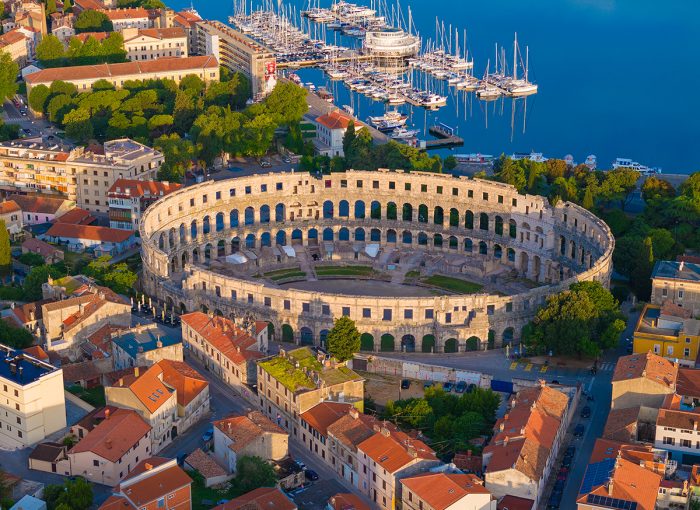

Pula is one of the most atmospheric coastal cities in Croatia, and after visiting it several times, we can say it offers far more than a quick stop at the Arena. Yes, its Roman amphitheatre is one of the city’s defining landmarks and one of the main reasons many travellers come here in the first place. But what makes Pula truly rewarding is the way history, coastline, and everyday life come together so naturally: ancient stone monuments, a real working-city rhythm, pine-fringed shores, rocky swimming spots, and easy access to places like Brijuni and the wider south of Istria.
Table of Contents
That mix is exactly why Pula works so well for different kinds of travellers. It is a great choice for first-time visitors to Croatia who want both culture and the sea, for couples looking for a city with atmosphere, for families who want sightseeing mixed with beaches, and for anyone road-tripping through Istria and looking for a practical, well-connected base.
Because we have returned to Pula more times than we can count, this guide is not built around just the headline sight. It is based on seeing how the city actually works as a destination: where to wander beyond the main landmarks, which experiences are most worth your time, how to combine old-town sightseeing with swimming and coastal walks, and why Pula makes such a useful base for exploring this part of Croatia.
In this guide, you will find the best things to do in Pula, the most important Roman sights, the best beaches, where to stay, what to eat, how many days to plan, and the most worthwhile day trips nearby. The goal is simple: to help you understand not only what to see in Pula, but why it is worth experiencing more slowly.
Where is Pula & what is it known for
Pula is located at the southern tip of the Istrian peninsula in Croatia, where the region’s layered history meets a deeply maritime setting. It is best known for the Pula Arena, one of its defining Roman landmarks, but the city’s appeal goes well beyond a single monument. Pula is also known for its broader Roman heritage, its rocky coves and beaches, and its position as one of the main bases for exploring Brijuni National Park, whose islands lie just off the coast and are reached by boat from nearby Fažana.
✨ Pula at a glance
At the southern tip of Istria, Pula brings together Roman history, Adriatic coastline, and the easy rhythm of a real coastal city — making it one of the most rewarding bases in this part of Croatia.
Location
Pula lies at the southern tip of the Istrian peninsula, facing the Adriatic and close to Fažana and Brijuni.
Best known for
The city is most famous for its Roman Arena, but also for its wider Roman heritage and monumental old core.
Coastline
Pula also offers beaches, rocky coves, clear water, and pine-fringed shores, all within easy reach of the city.
Gateway to Brijuni
It is one of the most practical bases for visiting Brijuni National Park, reached by boat from nearby Fažana.
Summer atmosphere
In summer, the city comes alive with concerts, festivals, and cultural events, including performances in historic settings.
Why visit
Pula is ideal if you want history, sea, food, and a useful Istrian base in one destination.
Good to know: Pula is not only a city of Roman ruins. What makes it special is the way monumental history, everyday Adriatic life, and the nearby coastline all flow together — so you can sightsee in the morning, swim in the afternoon, and end the day with dinner or an event in one of Croatia’s most atmospheric urban settings.
What makes Pula especially appealing is that it combines culture and coastline in a way that feels easy and natural. You can spend the morning among Roman remains, the afternoon by the sea, and the evening in a monumental setting that still comes alive with concerts, festivals, and summer events. The Arena itself continues to host major performances, while the city’s seasonal calendar also includes Roman-themed events and broader cultural programming across Pula.
A Brief History of Pula: From Roman Times to the Present
Pula’s story stretches back more than three thousand years, beginning with the Histri, the Illyrian people who once lived in this part of the Adriatic and gave Istria its name. Few places in Croatia carry their past so visibly, with each era leaving something behind in stone, layout, or atmosphere.
The city’s most famous chapter began in 177 BC, when Pula came under Roman rule. Over time, it grew into an important Roman centre, and this period left behind the landmarks that still define it today: the great Arena, the Forum, temples, gates, and other fragments of the ancient city. For many visitors, this Roman heritage is the first reason to come to Pula — and it remains one of the most impressive anywhere in Croatia.
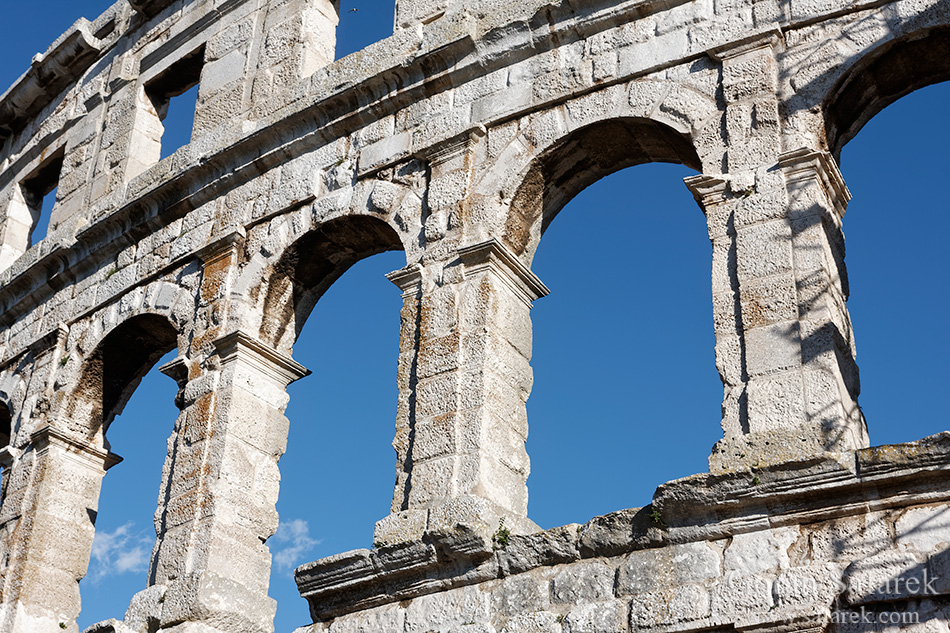
After the decline of the Roman Empire, Pula passed through centuries of change, shaped by the wider struggles and shifting powers of the Adriatic world. A long and important period began in 1331, when the city came under Venetian rule. Venice held Pula for centuries, strengthening its coastal role and leaving traces of its own presence in the city’s urban and defensive history.
Another major transformation came in the 19th century, when Pula became part of the Austro-Hungarian Empire and developed into its main naval port. This brought a different kind of importance: military, maritime, and strategic. It also added another distinct layer to the city we see today.
The 20th century was marked by further political change. Pula became part of Italy after the First World War, then Yugoslavia after the Second World War, before entering a new era with Croatian independence in 1991.
Today, Pula is defined by all of these layers at once. It is not only a city of Roman monuments, but a place where different centuries still coexist. That is part of what makes it so rewarding to visit: history here is not a backdrop, but part of the city’s everyday texture.
Is Pula worth visiting?
Yes, Pula is definitely worth visiting, especially for travellers looking for more than just postcard beauty. While some Istrian towns win people over instantly with their polished old streets and romantic harbour views, Pula offers something more layered. It feels bigger, more historic, more urban, and more lived-in, a city where Roman monuments, everyday local life, coastline, and summer atmosphere all exist side by side.
In terms of timing, one day is enough to see the main highlights, especially if your priority is the Arena and the historic core. Two days is a much better amount of time if you want a more balanced experience, with room for both sightseeing and the coast. Three to four days makes sense if you want to use Pula as a base, adding places like Brijuni, Fažana, Cape Kamenjak, or other parts of southern Istria.
☀️ Is Pula right for your trip?
Pula suits travellers who want a destination that feels historic, coastal, and real — with enough to see, enough to do, and enough depth to stay a little longer.
Why Pula is worth visiting
- more layered and historic than many smaller Istrian towns
- a strong mix of Roman heritage, coastline, and city atmosphere
- easy to combine sightseeing, swimming, and good food
- useful base for exploring southern Istria
Who will enjoy Pula most
- first-time visitors to Croatia
- couples wanting atmosphere without losing practicality
- families looking for culture and beach time
- road-trippers passing through Istria
How many days do you need?
- 1 day — enough for the main highlights
- 2 days — ideal for a balanced visit
- 3–4 days — best if using Pula as a base
Our take: Pula may not be the most immediately picture-perfect town in Istria, but it is one of the most rewarding. If you like places that feel layered, lived-in, and easy to experience beyond the obvious, it is well worth including in your trip.
Best things to do in Pula
After visiting Pula several times, we found that the city is most rewarding when you experience it as more than a checklist of Roman sights. Yes, the Arena is the headline landmark, but the best things to do in Pula come from combining its historic core with sea views, coastal walks, swims, evening atmosphere, and a few well-chosen excursions beyond the centre.
1. Visit the Pula Arena
If you do one thing in Pula, make it the Arena. Built in the 1st century AD, it is the city’s most iconic monument and the sight that defines Pula more than any other. What makes it so special is not only its age or scale, but the fact that it still feels deeply woven into the life of the city. This is not a ruin hidden away on the edge of town, but a place you keep returning to visually and physically as you move through Pula.
It is impressive from the outside, but going inside is well worth it if you want to better understand its structure, walk through the underground spaces, and experience one of the city’s most important historic landmarks more fully.
What also sets the Arena apart is that it is not only preserved, but still actively used. Today it hosts concerts, performances, and the Pula Film Festival, while in summer it also becomes the setting for historical spectacles and evening events. That continuity gives it a different feeling from many ancient monuments elsewhere, and is one of the reasons we love it so much — it is both a Roman amphitheatre and a living cultural venue.
2. Walk through Pula’s Roman old town
One of the best things about Pula is how easy it is to experience its Roman heritage on foot. After walking this part of the city ourselves more than few times, we’d say this is where Pula really starts to make sense as a destination — not as a collection of separate landmarks, but as a place where ancient monuments are still woven into the everyday life of the old town. Within a relatively compact area, you can move from the Forum and the Temple of Augustus to the Arch of the Sergii, the Twin Gate, and the Small Roman Theatre without needing transport or much planning at all. That makes Pula ideal for a self-guided walking route, especially if you like cities that reveal themselves gradually as you wander rather than through one fixed viewpoint.
The Forum is the natural place to begin, because it still feels like the city’s civic heart. From there, the Temple of Augustus stands out immediately: a beautifully preserved Roman temple built between 2 BC and AD 14, dedicated to the goddess Roma and Emperor Augustus. What makes it especially striking is the contrast between its classical form and the lively square around it — cafés, daily life, and two thousand years of continuity in one setting.
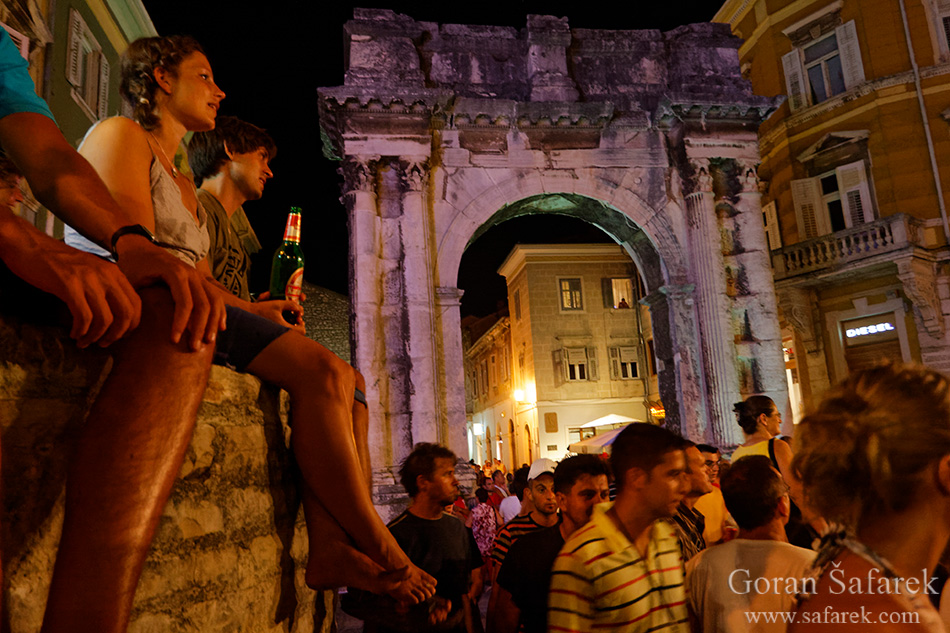
From the Forum, it is an easy walk to the Arch of the Sergii, one of the city’s best-known Roman monuments and a landmark that still feels very much part of modern Pula’s urban rhythm. Continue a little further, and you reach the Twin Gate, a double-arched Roman city gate dating to the 2nd–3rd centuries, which once formed part of the city entrance and today leads toward the Archaeological Museum and the hill above.
One of the most interesting stops is the Small Roman Theatre, tucked into the slope below the hill. This is the kind of place that many people might miss if they rush, which is exactly why Pula rewards slower exploring. The theatre forms part of the city’s wider Roman monumental complex, and today it also serves as a venue for cultural events, giving it a role that is both historic and still very much alive.
For most, this whole walk is best done slowly rather than efficiently. Allow at least 1 to 2 hours, more if you want to step inside the Temple of Augustus, pause for photos, or simply let the city unfold around you. Our honest take is that this is one of the most rewarding things to do in Pula because it feels both impressive and easy: you do not need a formal tour to enjoy it, but you do need enough time to notice the details.
3. Climb up to the Kaštel for views
If you want to understand Pula beyond its individual landmarks, climbing up to the Kaštel is one of the most worthwhile things to do. After walking through the old town below, this is the place where the city suddenly comes together. From up here, you get panoramic views over Pula’s rooftops, the harbour, the Arena, and the wider shape of the city, which makes it much easier to understand how its Roman core, hilltop fortifications, and coastal setting all connect.
It is also one of the best photo stops in Pula. The views feel broad without being distant, and because the city spreads out in layers, the perspective is especially rewarding if you have already wandered through the streets below.
4. Swim and walk along Lungomare
If you want to experience a different side of Pula, walking along Lungomare is one of the nicest things you can do. After the Roman monuments and old-town streets, this part of the city feels looser, greener, and more relaxed — a stretch of coastline where sea views, rocky coves, swimming spots, and pine shade all come together in a way that feels very Adriatic.
For us, this is one of the places where Pula feels most lived-in. Rather than sightseeing in the usual sense, Lungomare is about settling into the rhythm of the coast: walking slowly, finding a place to swim, watching people gather by the water, and enjoying the kind of everyday beauty that does not need much structure. It is one of the best ways to understand that Pula is not only a historic city, but also a place with a real local summer life.
The route is especially lovely in the late afternoon and towards sunset, when the light softens and the whole area takes on a calmer, almost golden feel. Even if you are not planning a full beach stop, it is worth coming here just for a walk. And if you do bring swimwear, it is easy to combine the promenade with a dip in one of the coves or rocky swimming spots along the way.
If you have time for only one experience beyond the main Roman sights, this is one of the best choices.
5. Visit Pula’s beaches
One of the reasons Pula works so well as a city break is that beach time fits naturally into the trip. You are not limited to monuments and old-town walking here — the coastline is a real part of the experience, with rocky coves, clear water, pine shade, and a mix of easy-access swimming spots and more scenic corners spread around the city.
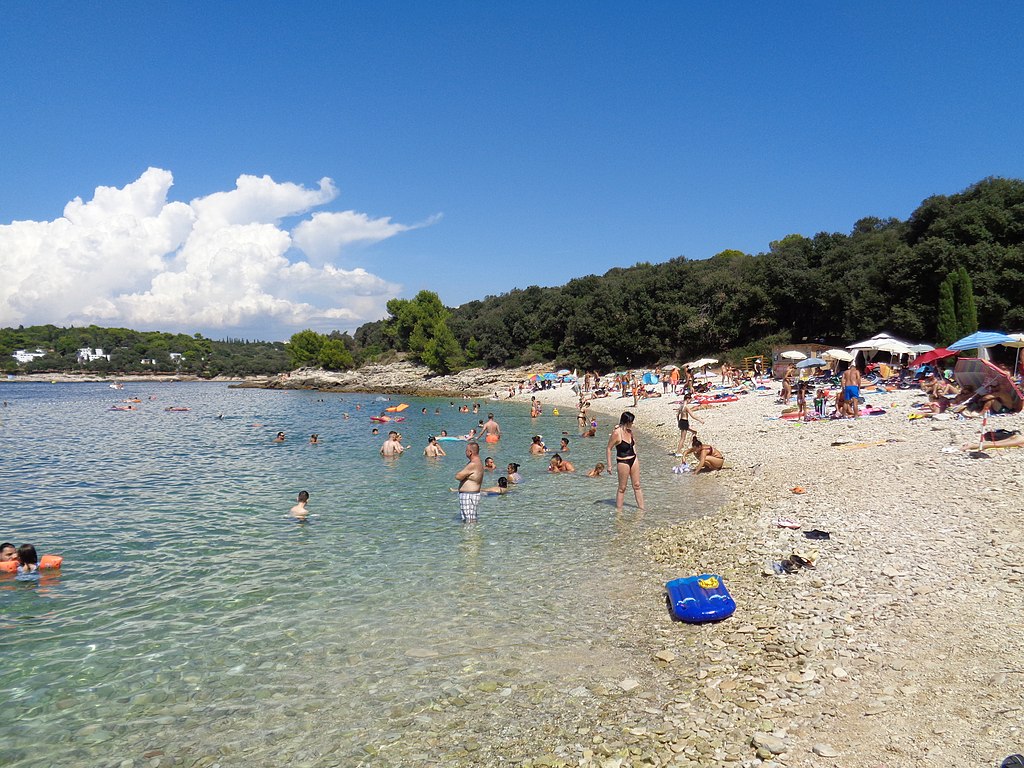
What we like about Pula is that the beaches do not feel like a separate excursion. Depending on where you stay and how you plan your day, it is easy to combine sightseeing with a swim, or to spend a slower afternoon by the sea after exploring the Roman core in the morning. That balance is one of the city’s biggest strengths, especially in warmer months.
Here are some of the most popular coastal areas:
- Ambrela Beach: This Blue Flag certified beach boasts crystal-clear waters and a pebbly shore, ideal for swimming and sunbathing.
- Stoja Beach: A hidden gem known for its rocky coastline and excellent snorkelling opportunities.
- Verudela Beach: A family-friendly beach with shallow waters and various water sports activities.
- Hawaii Beach: Despite its name, this local favourite offers a taste of the Mediterranean with its pristine waters and surrounding pine forests.
Best beaches near Pula if you have a car
If you have a car, Pula becomes an even better beach base because you can easily reach some of the most scenic stretches of coast in southern Istria. A few of the nicest options are still close to the city, while others are worth the extra drive for a wilder setting or a more relaxed day by the sea.
If you want a practical shortlist, these are some of the best nearby choices:
- Cape Kamenjak / Premantura – best for dramatic scenery, rocky coves, and a wilder feel
- Beach Pinižule, Premantura – a beautiful option in the Premantura area if you want clear water and a more natural setting
- Fažana beaches – calm, family-friendly, and lovely if you want Brijuni views
- Hidrobaza, Štinjan – spacious and easy-going, especially good for families and a straightforward beach day
- Pješčana Uvala – a gentler option near Pula, useful if you want easier access and a calmer swim
- Bijeca Beach, Medulin – one of the best choices if you prefer a sandy, shallow beach rather than rocky coves
Our honest take is that Cape Kamenjak is the best choice if you want something memorable and scenic.
6. Take a day trip to Brijuni National Park
If you have enough time in Pula for one proper excursion, Brijuni National Park is one of the best and most worthwhile choices. This is one of the main reasons many travelers decide to stay in Pula for more than a night: it gives you easy access to a very different side of southern Istria, where nature, archaeology, island landscapes, and a quieter Adriatic atmosphere all come together. For us, Brijuni makes Pula feel much more than a city break. It turns it into a base.
The most important practical thing to know is that you do not go to Brijuni directly from Pula’s centre. To visit the national park, you first need to go to Fažana, the small coastal town just north of Pula, and board the boat there, the crossing to Veliki Brijun taking about 15 minutes.
For many travellers, this is one of the best ways to balance a Pula itinerary. After Roman monuments, city walks, and time by the sea, Brijuni adds something greener, quieter, and more spacious. Veliki Brijun is the largest and most visited island in the archipelago, known for combining natural and cultural heritage in one place, which is exactly why it works so well as a day trip.
Our honest take is that Brijuni is especially worth it if you are spending two or more days in Pula, or if you like trips that combine scenery with history rather than just beach time. It is not essential for a very rushed visit, but if you want Pula to feel like a base rather than a stop, this is one of the strongest additions you can make.
7. Explore museums and rainy-day sights
If the weather turns, or if you simply want a break from walking between monuments, Pula has enough indoor options to keep the day interesting. The most obvious historical stop is the Archaeological Museum of Istria, which adds useful context to everything you see in the Roman old town.
For something more modern and family-friendly, the MEMO Museum offers a more nostalgic, 20th-century angle on everyday life.
One of the best indoor attractions is Aquarium Pula, set inside the old Fort Verudela on the Verudela peninsula. What makes it more memorable than a standard aquarium is the setting itself: Austro-Hungarian stone fortifications combined with Adriatic marine life, plus broader Mediterranean and tropical exhibits.
If you want something more unusual, the wider Verudela area also includes the Underwater Park Verudela, a seasonal activity where snorkelers and divers can explore submerged objects and structures. It is less of a classic rainy-day sight and more of an alternative attraction for travelers who want something playful and different by the sea.
8. See Pula in the evening
Pula has a different kind of charm in the evening. Once the day softens, the Arena lit up at night becomes one of the city’s most atmospheric sights, and the old town feels calmer after many day visitors have left. This is the best time to slow down, have dinner, and enjoy a walk through the centre or along the waterfront.
In summer, evenings are even more special because Pula’s historic spaces continue to come alive with concerts, festivals, and other events, especially in and around the Arena. For us, this is one of the moments when Pula feels less like a sightseeing stop and more like a city to truly enjoy.
Best time to visit Pula
For most travellers, the best time to visit Pula is late spring through early autumn, but the right season really depends on what kind of trip you want. Summer is best if your priority is swimming, beach time, and open-air events, especially because the Arena and other city venues host major concerts and performances during the warmer months.
Shoulder season — especially May, June, and September — is often the sweet spot. The weather is usually more comfortable for city walks, sightseeing is easier, and day trips feel less rushed than in peak summer. It is also a better time for photography, because the light is softer and the city is generally less crowded. Based on climate patterns, Pula’s hottest and most beach-focused period is concentrated around July and August, while the months around that window are milder and easier for active exploring.
Winter and the off-season can still work well if you care more about Roman history, slower travel, and a quieter local feel than swimming. Pula does not stop being interesting, but it is a very different experience: colder, calmer, and much less oriented around the sea.
☀️ Best time to visit Pula – at a glance
A quick heatmap for the year: paler blocks mean lower or softer conditions, darker blocks mean warmer, busier, or more expensive conditions.
| Jan | Feb | Mar | Apr | May | Jun | Jul | Aug | Sep | Oct | Nov | Dec | |
|---|---|---|---|---|---|---|---|---|---|---|---|---|
| Air | ||||||||||||
| Sea | ||||||||||||
| Crowds | ||||||||||||
| Prices |
Legend
Air: pale blue = cool, pale orange = mild, deeper orange = hot.
Sea: pale blue = cold, mid blue = fresh, deeper blue = warm and swimmable.
Crowds: pale green = low, peach to deeper orange = busy to peak.
Prices: pale green = lower, peach to deeper orange = higher to peak.
How many days in Pula
After visiting Pula several times, we’d say the ideal length depends less on the city itself and more on how you want to use it. If you only want to see the headline sights, one day in Pula is enough for the Arena, a walk through the Roman old town, and a slower finish by the sea. But in our experience, two days feels much better. That gives you enough time to enjoy both sides of Pula — the historic city and the coastline — without treating everything like a checklist. Three days or more starts to make even more sense if you want to add Brijuni, Cape Kamenjak, or other places in southern Istria, or just explore the town at a slower rhythm. And if you are planning a broader regional trip, Pula also works very well as a base, especially because it has an airport and good access to places like Fažana, Medulin, Rovinj, Kamenjak, and Brijuni.
✨ How many days do you need in Pula?
1 day in Pula
Best for the essentials: Arena, Roman old town walk, Forum, and sunset by the sea.
2 days in Pula
The sweet spot for most travelers: full city time, beach time, plus a museum or viewpoint and a proper evening atmosphere.
3 days in Pula
A strong choice if you want to add Brijuni, Cape Kamenjak, or more of southern Istria.
Pula as a base
Great for airport access and easy exploring around Fažana, Medulin, Rovinj, Kamenjak, and Brijuni.
Our take: if you can manage it, give Pula 2 full days. That is usually enough to enjoy both the Roman sights and the sea without rushing.
Where to stay in Pula
After several stays in and around Pula, we’d keep this simple: for most first-time visitors, the old town is best if you want atmosphere and walkability; Verudela is best if you want beaches, resort comfort, and an easier summer feel; and the residential areas between the centre and the coast are often the most practical if you are driving and want easier parking.
If you are not renting a car, we would stay either in the old town or in a very well-positioned part of Verudela, depending on whether your trip is more about Roman sights or beach time. From our experience, Pula works better than Fažana as a base if you want a fuller city stay with more restaurants, more accommodation choices, airport access, and easier logistics for a wider Istria trip, while Fažana is better if your priority is Brijuni and a smaller, calmer seaside feel. Verudela’s resort zone is especially strong for beach stays, while Fažana is the departure point for Brijuni boats.
Best hotels and apartments in Pula



What to eat in Pula
Food is one of the best reasons to slow down in Pula. The city sits between the Adriatic and inland Istria, so the dining scene naturally blends seafood, olive oil, pasta, cured meats, local wine, and seasonal ingredients. That mix makes eating here feel varied rather than repetitive. And because we genuinely adore Istrian truffles, this is one part of a Pula trip we would never rush.
What we like about Pula is that you can move easily between different kinds of meals. One day it might be a simple pizza in the old town, the next a seafood lunch near the water, and then a proper Istrian dinner built around fuži pasta, pršut, boškarin, Malvazija, and truffles. If you only try a few local specialities, we would start with fuži, Istrian pršut, fresh Adriatic fish or octopus, and at least one good truffle dish.
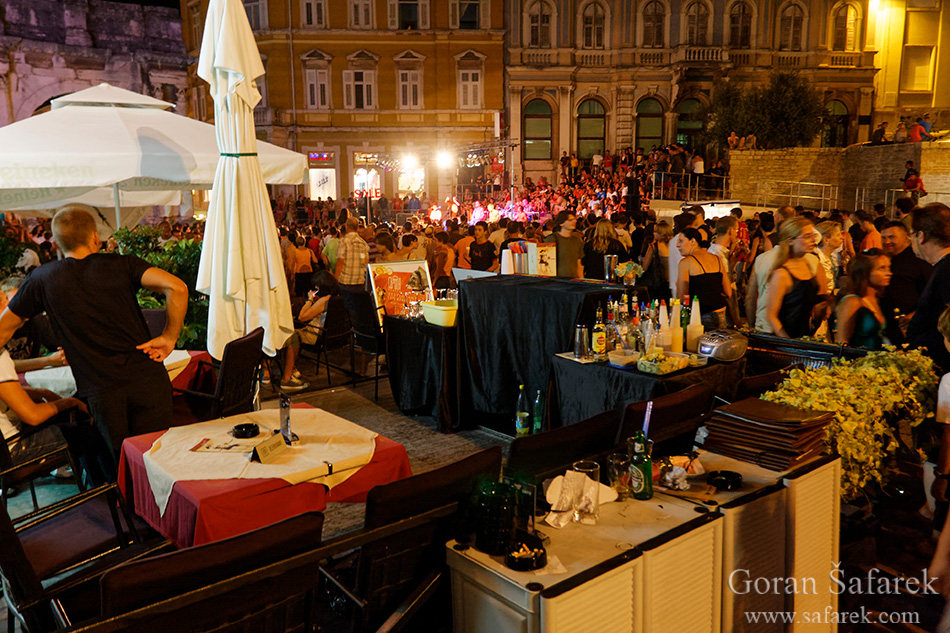
It is also worth knowing that some of the most memorable meals are not always right in the middle of the old town. Pula itself has plenty of good places to eat, but the wider southern Istria area adds even more range, especially if you have a car. In practice, the best food planning here often means thinking in terms of Pula plus nearby places like Banjole, not only the centre.
For a more traditional Istrian meal in Pula itself, Konoba Boccaporta is one of the most reliable choices. It is located in the Dolinka area of Pula, not in the old town, and works well if you want a more local, less touristy atmosphere with classic regional dishes.
If seafood is your priority, Konoba Batelina is one of the best-known names in the area, but it is important to note that it is in Banjole, just south of Pula, rather than in the city itself. It is especially known for serious seafood cooking based on the daily catch, and it is the kind of place worth planning ahead for.
In Pula itself, Ribarska Koliba is a strong choice if you want seafood in a more polished setting near Marina Veruda, while Farabuto is a very good option for a slightly more intimate Mediterranean meal with a thoughtful, modern feel. Farabuto is located on Sisplac ulica 15, which also makes it fairly convenient if you are staying between the centre and the coast.
For something more casual, Hook & Cook is a fun seafood-focused option and one of the better places in Pula when you want something quicker but still memorable. And if you want an easy, central, no-fuss meal after sightseeing, Pizzeria Jupiter in the old town is a classic standby on Castropola 42.
Our honest take is that the best way to eat in Pula is not to overcomplicate it. We would aim for one traditional Istrian meal, one seafood meal, and one casual meal, because that gives you a much better feel for the city than chasing only the most famous restaurant names. And yes, if there is a truffle pasta on the menu, we are ordering it.
Pula’s culture and arts scene
Pula has a much stronger cultural side than many first-time visitors expect. From our experience, this is one of the reasons the city feels deeper than a simple Roman stop. In summer especially, the Arena, the Small Roman Theatre, squares, and other venues become part of the city’s everyday cultural life, with concerts, film, theatre, and seasonal events woven into the historic setting. The official Pula events calendar shows major performances in the Arena, the Small Roman Theatre, INK, and other venues across the city.
The best-known event is the Pula Film Festival, which has been held in the Arena since 1954 and is one of the city’s defining cultural traditions. Beyond that, Pula also has a year-round arts scene through places like INK – Istrian National Theatre, the Museum of Contemporary Art of Istria, and Community Center Rojc, which adds a more contemporary and creative layer to the city.
✨ Culture highlights in Pula
Pula Film Festival
Pula’s signature cultural event, best known for film screenings in the Arena.
Summer concerts
The Arena and other historic venues host major concerts and live events through the warmer months.
Theatre & performances
INK and outdoor venues like the Small Roman Theatre keep Pula active beyond standard sightseeing.
Modern art & exhibitions
The Museum of Contemporary Art of Istria adds a strong modern counterpoint to the city’s Roman heritage.
Historic settings
One of the most special things about culture in Pula is where it happens: Roman and historic spaces still in use today.
Why it matters
Pula feels more layered because culture here is not separate from the city — it is part of how the city lives.
Getting to and Around Pula
Getting to Pula is usually quite straightforward, and after visiting more than once, we’d say it is one of the easier places in Istria to use as a base. If you are flying, driving, or arriving by bus, logistics are generally simple. And once you are in town, the historic centre is easy to explore on foot, while buses and taxis help with the coast, Verudela, and nearby areas. For wider Istria, though, a car still gives you the most freedom.
By air
Pula Airport (PUY) is the main air gateway for the city. It sits just outside town and runs its own airport shuttle bus into Pula, with the official current one-way fare listed at €6. That is the easiest option if you want a direct transfer without renting a car.
By bus
For most travelers arriving overland, the bus is the most practical public transport option. Pula has regular coach connections with other Croatian cities, and current Arriva listings show the route from Pula to Zagreb taking from about 3 hours 10 minutes, with multiple departures daily. That is much faster than the older “about 5 hours” estimate you often still see online.
By car
If you are road-tripping through Istria, driving to Pula is easy and often the most flexible choice. A car becomes especially useful if you want to combine the city with beaches outside the centre, Cape Kamenjak, Banjole, Medulin, or inland Istria. From our experience, Pula works well by car, but where you stay matters a lot for parking convenience.
By train
Pula does have a railway connection, but we would not plan around the train unless you have a very specific reason. In practical travel terms, buses are usually the more useful and common option for reaching the city.
By sea
In season, Pula can also be reached by fast ferry from Venice. Current ferry operators list seasonal catamaran services between Venice and Pula, generally running from May to early October, with a crossing time of about 3 hours. That can be a very appealing arrival if you are combining Croatia with northern Italy, but it is a seasonal rather than year-round option.
Getting around Pula
Once you are in Pula, the old town and Roman core are best explored on foot. That is where the city feels most compact and easiest to enjoy without transport. For beaches, Verudela, or other areas beyond the centre, Pulapromet’s local bus network is useful, and it is more visitor-friendly than many people expect. Official current fares list a daily ticket at €5, a 3-day ticket at €10, and a 7-day ticket at €20. Single tickets are also available, with lower prices if bought in advance online as QR tickets.
Taxis are easy for shorter hops, especially between the centre, Verudela, and nearby residential areas, but for most first-time visitors, walking + occasional local buses is enough if you are staying fairly central. If you want to explore Fažana, Medulin, Rovinj, Cape Kamenjak, or more of southern Istria, then renting a car becomes much more worthwhile.
Our take: if your trip is mostly about Pula itself, you do not necessarily need a car. If your trip is really about Pula plus wider Istria, then a car makes the experience much easier.
Day Trips from Pula: Exploring the Istrian Peninsula
While Pula offers plenty to keep visitors entertained, the surrounding Istrian Peninsula is rich with attractions that make for excellent day trips. Here are some popular destinations:
- Rovinj: Often called the pearl of Istria, this picturesque coastal town is known for its Venetian-style architecture and vibrant art scene. It’s approximately a 40-minute drive from Pula.
- Motovun: This hilltop town is famous for its medieval walls, truffles, and annual film festival. It’s about an hour’s drive from Pula.
- Brijuni National Park: A group of islands known for their natural beauty and historical sites, accessible by boat from Fažana, near Pula.
- Kamenjak: For those seeking a more secluded experience, the Kamenjak Peninsula, located just south of Pula.The peninsula’s rugged coastline, dotted with small islands and inlets, provides a perfect backdrop for kayaking and cliff jumping adventures.
These day trips offer a chance to experience the diverse landscapes and cultural offerings of the Istrian Peninsula. From coastal towns to rolling hills dotted with vineyards and olive groves, each destination provides a unique perspective on the region’s rich heritage and natural beauty.
Planning Your Perfect Pula Holiday: Tips and Recommendations
Tips for visiting Pula
☀️ Choose your season well: June to August is the liveliest period, with the warmest weather and the most events. May and September are often a better balance of pleasant weather and fewer crowds.
🕒 Give Pula enough time: Pula is larger and more varied than many visitors expect, so it is worth planning at least 2 to 3 days if you want to enjoy both the city and the coast properly.
🎟️ Check the Pula Card: If you plan to visit several attractions, it is worth seeing whether the Pula Card still offers useful discounts during your stay.
💬 Learn a few Croatian words: English is widely spoken, but even a simple hvala or dobar dan is appreciated and makes interactions feel warmer.
🍷 Try the local food: Do not miss Istrian truffles, olive oil, fuži pasta, seafood, and Malvazija if you want a real taste of the region.
🌿 Respect the environment: Pula’s coastline and nearby landscapes are a big part of its appeal, so be mindful around beaches, coves, and natural areas.
⛪ Be respectful at religious sites: If you visit churches or other sacred spaces, dress modestly and remember they are active places of worship.
💧 Stay hydrated: Pula’s summers can feel hot and exposed, especially around stone monuments and open squares, so always carry water with you.
🎭 Check the event calendar: Pula feels especially atmospheric when concerts, screenings, or festivals are on, so it is worth seeing what lines up with your trip.
With a little planning, Pula becomes far more than a quick stop for the Arena. Between its Roman heritage, rocky coastline, slower local corners, and lively cultural side, it is a city that rewards travelers who give it a bit of time and range. Used well, this guide should help you experience Pula not just as a place to see, but as a place to properly enjoy.